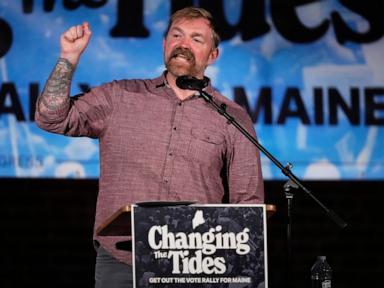
Maine Democrats Divided Over Platner Amid Personal Scandals
Maine Democrats face internal conflict over Senate candidate Graham Platner, with some reluctantly supporting him despite recent personal allegations.
Graham Platner, once considered the Democratic Party's strongest contender to unseat Republican Senator Susan Collins, is now at the center of a divisive debate among Maine Democrats due to mounting personal scandals. These controversies have cast doubt on his candidacy and complicated the party's strategy to regain control of the Senate.
The allegations, detailed in recent reports by The New York Times and the Wall Street Journal, include claims that Platner sent sexually explicit text messages to multiple women and that former girlfriends described his behavior as intimidating and disturbing. These reports have created a rift within the state's Democratic electorate, forcing voters and party officials to grapple with difficult choices.
Some voters, like Bangor resident Nancy Jacobson, express dismay but feel compelled to support Platner out of a lack of alternatives. "What else are we going to do with this stage in the game?" Jacobson stated, indicating her vote would be based on Platner's perceived political sincerity. Platner himself has acknowledged past imperfections in relationships but has denied any physically threatening or violent conduct. His wife, Amy Gertner, has publicly backed him, emphasizing marital support over perfection.
However, a segment of Maine Democrats, including state representatives, have publicly withdrawn their support and stated they will not vote for Platner. Representatives Allison Hepler and Holly Eaton, who initially supported Platner, have announced they will vote for Governor Janet Mills in the Democratic primary, even though Mills suspended her own campaign in April. Eaton specifically cited controversial online comments and allegations about a tattoo associated with Nazism as reasons for rescinding her endorsement.
Eaton declared she would "never vote for Graham Platner," expressing concern that the ongoing allegations could jeopardize the party's chances against Senator Collins in the November general election. Platner has denied any knowledge of the tattoo's Nazi association until recently, stating he obtained it 18 years prior.
The internal divisions highlight the significant challenges Platner faces, not only in addressing the allegations but also in unifying the Democratic base. The focus on his personal life has overshadowed his policy platform and campaign objectives, raising questions about his viability as a statewide candidate.
As the election cycle progresses, the Democratic Party in Maine must navigate this complex situation. The reluctance of some staunch supporters and the outright opposition from others suggest that Platner's path to the Senate, and his ability to secure the full backing of his party, remains uncertain.
Further questions linger regarding the extent of the impact these revelations will have on voter turnout and the broader electoral landscape in Maine. The party's response and Platner's own efforts to counter the narratives surrounding his personal conduct will be crucial in the coming months.
This article was written by AI based on publicly available news reporting. Original reporting by the linked source.