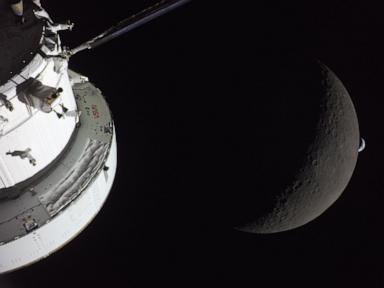
NASA Eyes 2028 Moon Return, Outlines Incremental Base Development Plan
NASA revealed new details on its multi-phase plan to establish a permanent lunar base, aiming for a human return to the Moon in 2028.
NASA is charting a course for a permanent human presence on the Moon, with new details emerging about its ambitious plan to establish a lunar base. The space agency aims to return astronauts to the lunar surface by 2028, shifting from the Apollo-era "flags and footprints" missions to a long-term vision of a settlement capable of supporting continuous human habitation.
This endeavor represents a significant evolution in lunar exploration strategy. Unlike the brief sorties of the 1960s and 70s, NASA's current objective is to build an enduring infrastructure on the Moon. The initiative, initially announced with a $20 billion price tag, has been further elaborated upon, with the agency providing updates on development progress and the selection of vendors crucial for the initial stages.
During a recent news conference, NASA Administrator Jared Isaacman highlighted the challenging nature of the undertaking. He noted that the combined 80 hours of lunar extravehicular activity from all Apollo missions, conducted over half a century ago, provides limited insight into the complexities of establishing a long-term base. Isaacman emphasized the extreme environmental conditions on the Moon, including surface temperatures fluctuating from over 250 degrees Fahrenheit in sunlight to below -250 degrees Fahrenheit in darkness, and the absence of atmospheric protection from radiation, space weather, and meteorite impacts.
The development of the Moon Base is planned to be an incremental process, unfolding over multiple phases. Isaacman clarified that the agency is not immediately pursuing a fully constructed base but rather a step-by-step approach to demonstrate technological viability and build essential capabilities. This phased strategy is designed to address the hostile lunar environment and ensure the safety and sustainability of future missions.
NASA has outlined an initial development timeline extending from the present through 2032 and beyond. Phase 1, which has already commenced, focuses on proving the functionality of key technologies and the reliability of private companies supplying critical hardware. This phase aims to ensure that reaching the lunar surface is a dependable endeavor, allowing for the delivery of multiple assets.
"We are going to experiment on the things that we know are ahead of us that we're going to need to build a permanent infrastructure," Isaacman stated, underscoring the importance of testing and scientific experimentation for survival and construction on the Moon.
The rationale behind undertaking such a challenging and costly mission, Isaacman explained, lies in the pioneering technologies developed, the scientific discoveries to be made, and the potential for advancements that will benefit life on Earth. He also cited the inspiration for future generations and the necessity of mastering skills for future interplanetary endeavors.
While the specific technologies and architectural designs for the base are still being refined, the phased approach allows NASA to learn and adapt, gradually overcoming the significant environmental hurdles presented by the Moon. The agency's commitment to this long-term vision signals a renewed era of human space exploration with a focus on sustained presence beyond Earth.
This article was written by AI based on publicly available news reporting. Original reporting by the linked source.