North Korea Tests AI-Guided Missiles for the First Time
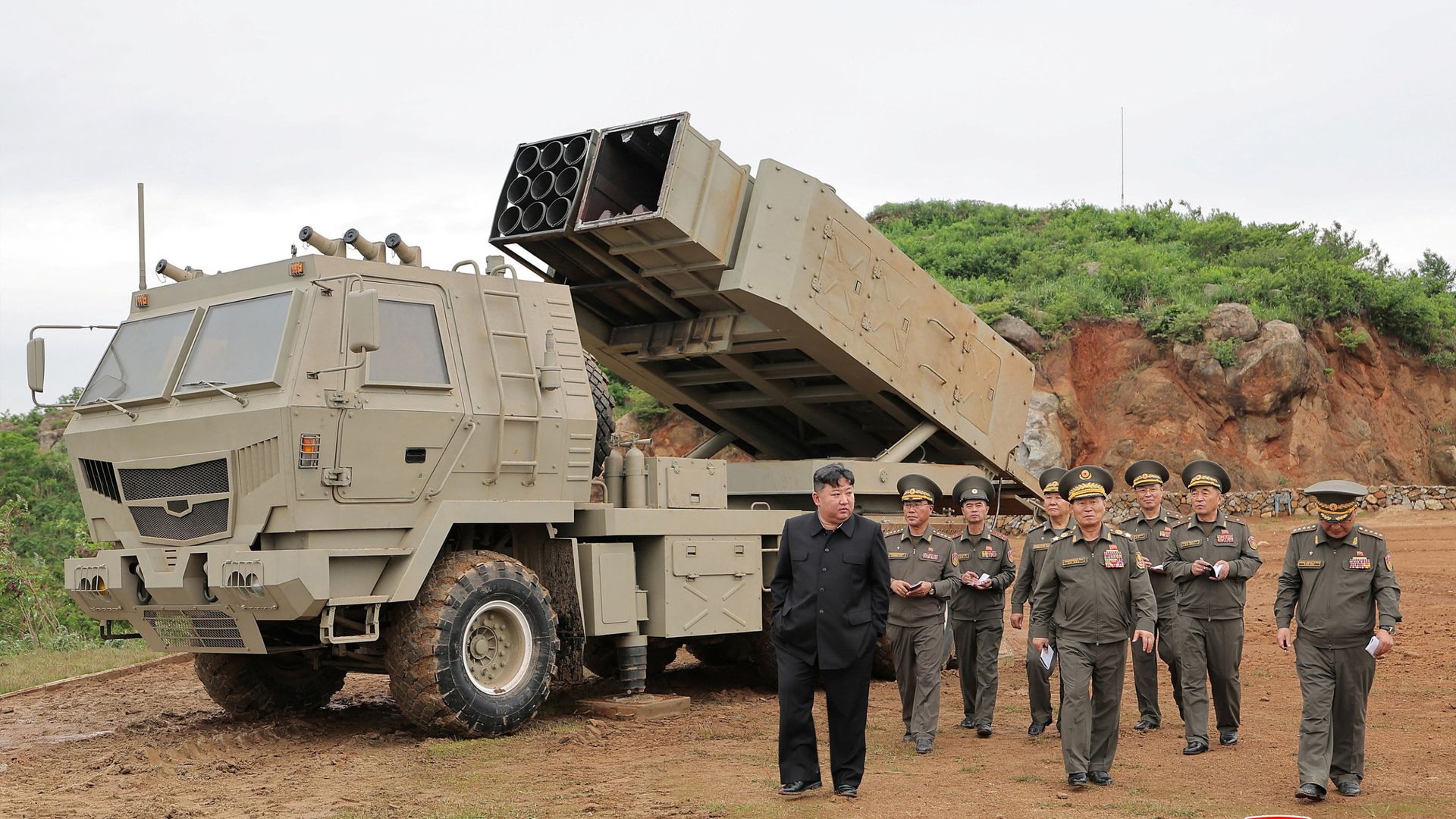
North Korea has successfully tested missiles incorporating artificial intelligence for guidance, state media reported, marking a significant technological advancement.
North Korea has announced the successful testing of missiles guided by artificial intelligence for the first time, according to state media reports. The development signifies a notable step in the nation's ongoing efforts to enhance its missile capabilities.
The state-controlled Korean Central News Agency (KCNA) reported on the successful test, detailing that the missiles employed AI for "precision guidance." While specific details regarding the type of missile or the exact nature of the AI integration were not provided, the announcement underscores North Korea's commitment to advancing its military technology.
This reported test is seen by many observers as an attempt by Pyongyang to demonstrate a more sophisticated approach to missile warfare, potentially increasing the difficulty for defensive systems to intercept. The use of AI could allow missiles to adapt to countermeasures or identify targets with greater accuracy.
The implications of this development are significant, particularly for regional security. The integration of AI into ballistic missile technology could alter the strategic landscape in Northeast Asia, raising concerns among neighboring countries and international powers.
Historically, North Korea has focused on developing its ballistic missile arsenal, often conducting tests that draw international condemnation and sanctions. These tests have ranged from short-range tactical missiles to intercontinental ballistic missiles (ICBMs) theoretically capable of reaching the United States.
The specific advancements in AI guidance systems remain largely unverified by external sources. However, if confirmed, it would represent a leap beyond conventional guidance methods, which typically rely on pre-programmed trajectories or inertial navigation systems.
International bodies, including the United Nations, have imposed strict sanctions on North Korea aimed at curbing its weapons programs. The reported development of AI-guided missiles could prompt renewed calls for stricter enforcement and further international scrutiny of Pyongyang's military activities.
Questions remain about the maturity and effectiveness of North Korea's AI missile technology. The extent to which these systems can truly adapt and operate autonomously in real-world scenarios is yet to be determined, but the announcement alone signals a new dimension to the nation's military ambitions.
This article was written by AI based on publicly available news reporting. Original reporting by the linked source.