Passengers Restrain Pilot During Terrifying Medical Emergency on Air Canada Flight
Passengers aboard an Air Canada flight restrained the pilot during a 40-minute medical emergency, prompting a diversion to Boston.
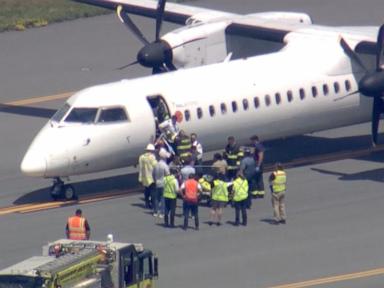
Passengers aboard an Air Canada flight helped restrain a pilot who experienced a medical emergency, described as appearing to be a seizure, for approximately 40 minutes. The incident occurred on Wednesday, June 24, 2026, after the aircraft suddenly swerved mid-flight, leading to a diversion to Boston.
Air Canada confirmed that Flight AC7664, operated by regional partner PAL Airlines, was en route from Newark, New Jersey, to Halifax, Nova Scotia, when the captain experienced the medical emergency. The airline stated that the first officer took control of the aircraft and successfully diverted the flight to Boston, where it landed safely. The captain was subsequently taken to a hospital for medical treatment.
Rodney McDonald, a passenger traveling with his family, told ABC News that the ordeal began when the aircraft lurched unexpectedly. He described the sensation as not being turbulence, but rather feeling like someone had "jilted the controls, and then it happened over and over again." He recounted how a flight attendant rushed into the cockpit and later emerged, dragging one of the pilots into the aisle. McDonald stated that he and about four other passengers helped restrain the pilot, who appeared to be experiencing a seizure, for nearly 40 minutes.
The De Havilland Q400 was carrying 61 passengers. Air Canada has stated it is working to arrange alternate travel for those on board. The event highlights the critical role of flight crew and passenger cooperation during unexpected in-flight emergencies.
McDonald described the experience as "really horrifying" and noted that he went to sit with his family after realizing the pilot was "out of control physically." He explained that passengers used seatbelts to help restrain the pilot’s limbs and chest. A registered nurse on board reportedly helped direct passengers and assist the pilot, while McDonald praised the flight attendants for maintaining their composure.
While passengers took action to restrain the pilot, the CDC notes that individuals experiencing seizures should not be held down due to the risk of further injury. Instead, the recommended approach involves clearing the area of hazards and gently turning the person on their side to keep their airway clear.
The airline has not provided further details regarding the pilot's condition or the specific nature of the medical emergency. The incident underscores the unpredictable nature of medical events that can occur during air travel and the preparedness required from both crew and passengers.
Air Canada is arranging alternative transportation for the 61 passengers affected by the diversion. The flight's safe landing in Boston, despite the challenging circumstances, is a testament to the first officer's actions and the collective efforts of those on board.
This article was written by AI based on publicly available news reporting. Original reporting by the linked source.