Protester Rants Against US Military at Climate Week Event
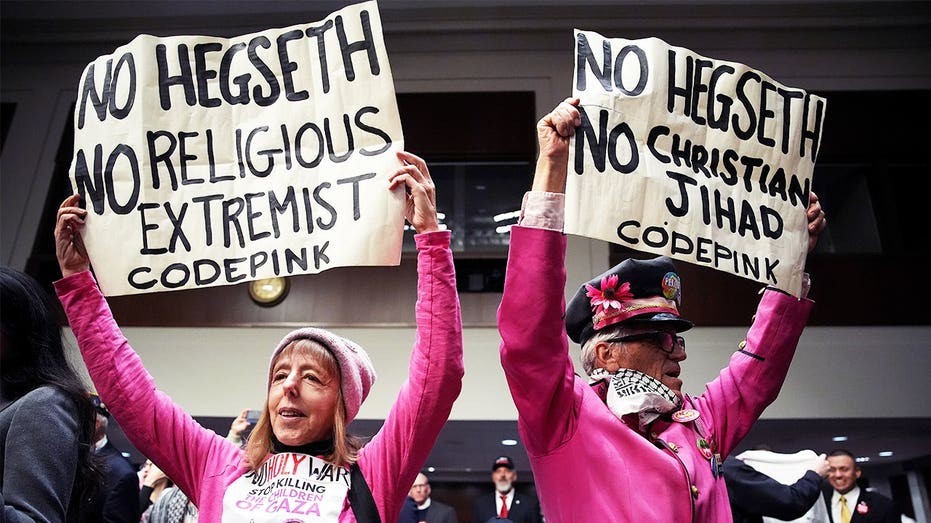
A Code Pink activist disrupted a Climate Week event in New York City, demanding an end to the U.S. military's carbon emissions.
A Climate Week event in New York City was disrupted on Tuesday by a protester from the group Code Pink, who loudly criticized the U.S. military's environmental impact.
The incident occurred during a panel discussion focused on climate action and sustainability, drawing attention to the significant carbon footprint associated with military operations worldwide.
The activist, identified as a member of Code Pink, a women-led anti-war organization, commandeered the microphone during a question-and-answer session. She voiced strong opposition to the military's extensive use of fossil fuels and its role in contributing to climate change, demanding that military emissions be addressed as a critical component of global climate policy.
While the specific event details and other panelists were not disclosed in the source material, the disruption highlights growing concerns among some environmental activists about the overlooked environmental consequences of defense spending and military activities. These concerns often extend to the production, transportation, and deployment of military hardware, as well as the environmental damage caused by conflicts.
Code Pink has a history of organizing protests against U.S. military actions and foreign policy. The group advocates for peace and disarmament, frequently linking military spending to social and environmental priorities. Their focus on the military's carbon footprint is part of a broader movement seeking to hold all major sectors accountable for their environmental impact, including powerful governmental and defense institutions.
Disruptions at high-profile events like Climate Week, which aims to bring together leaders and policymakers to accelerate climate action, often serve to amplify specific messages and draw media attention to issues that may be marginalized in mainstream discussions. The protester's actions underscore the tension between conventional climate advocacy and the more radical demands for systemic change that challenge established economic and political structures.
It remains unclear how the event organizers and attendees responded to the disruption, or if any follow-up actions were taken. The incident, however, brings renewed focus to the debate over the environmental responsibilities of national defense agencies and the scale of their contribution to global greenhouse gas emissions, an area often less scrutinized than industrial or consumer-based pollution.
The broader implications of such protests suggest a potential for increased activism targeting governmental and military institutions in the climate movement. As global temperatures continue to rise and extreme weather events become more frequent, pressure mounts on all sectors, including those traditionally considered essential for national security, to demonstrate tangible commitments to environmental sustainability.
This article was written by AI based on publicly available news reporting. Original reporting by the linked source.