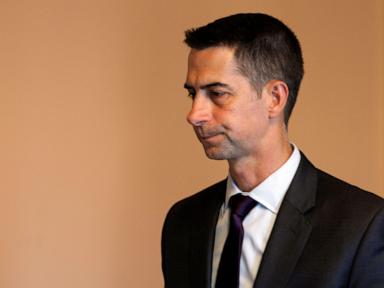
Republican Senators Cruz, Cotton, Wicker Criticize Trump's Iran Deal
Notable Republican senators, including Ted Cruz and Tom Cotton, voiced strong disapproval of President Trump's recent memorandum of understanding with Iran, citing concerns over financial concessions.
Several prominent Republican senators have publicly broken with President Donald Trump over a recently signed memorandum of understanding with Iran, expressing significant concerns about the agreement's terms and potential implications.
These dissenting voices, including key allies of the President on Capitol Hill, highlight a divergence in foreign policy approaches, particularly regarding economic concessions to Iran. The core of their opposition centers on the substantial economic opportunities the agreement reportedly offers Iran, with seemingly few reciprocal concessions outlined in the short-term deal.
The agreement, signed by President Trump on Wednesday, has drawn sharp criticism for its potential to allow Iran to rebuild its economy. Senator Tom Cotton, chairman of the Senate Intelligence Committee and a vocal proponent of a hawkish stance on Iran, expressed his reservations. He stated that while Trump deserves credit for weakening Iran, the nation must not "squander the leverage" built over years of pressure.
Cotton's comments are particularly noteworthy given his consistent advocacy for a tougher approach against the Iranian regime. Other Republican senators echoed his concerns, arguing that the deal provides immediate relief on oil revenues for Iran and includes pledges to help unfreeze approximately $24 billion in Iranian assets, alongside efforts to establish a $300 billion reconstruction fund.
Senator Ted Cruz of Texas described the prospect of providing billions of dollars to Iran as "an exceptionally bad idea," suggesting the President may be receiving poor counsel. "I don't want to see us send a penny to the ayatollah, and I hope that we don't," Cruz stated, while also affirming his support for the President's overall Iran policy.
Senate Armed Services Committee Chairman Roger Wicker of Mississippi issued a particularly strong rebuke, comparing the proposed $300 billion reconstruction fund to a "pittance" in comparison to concessions made under the Obama administration's 2015 Iran deal. The memorandum indicates that the U.S. and Middle East partners would develop this fund, though President Trump has stated the U.S. would not contribute financially.
Wicker also voiced opposition to lifting sanctions, unfreezing assets, or pressuring Israel regarding Hezbollah. He argued that the Iranian regime has not abandoned its anti-American and anti-Israeli rhetoric and would likely use any financial gains to further its objectives.
These Republican senators' public disagreements signal a significant challenge to the administration's Iran policy. The specific details of the memorandum of understanding and the extent of future U.S. involvement in any reconstruction efforts remain areas of focus and contention among lawmakers.
This article was written by AI based on publicly available news reporting. Original reporting by the linked source.