Rubio Criticizes WHO Ebola Response Amid US Public Health Cuts
US Secretary of State Marco Rubio criticized the WHO's Ebola response, citing delays while the US faces its own public health funding cuts.
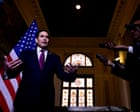
US Secretary of State Marco Rubio stated on Tuesday that the World Health Organization (WHO) was "a little late" in identifying the recent deadly Ebola outbreak in the Democratic Republic of the Congo (DRC) and Uganda.
Rubio’s remarks come as the United States continues to grapple with significant cuts to its own public health resources, a situation that experts warn could exacerbate future health crises.
Speaking to reporters, Rubio indicated that while the Centers for Disease Control (CDC) and the WHO are leading the response, the WHO’s delayed identification was unfortunate. The US has committed approximately $13 million in assistance for the outbreak, following substantial aid reductions last year. Plans are underway to establish around 50 clinics for Ebola treatment in the DRC, though accessibility in rural, war-torn areas presents significant challenges.
The WHO has expressed concern over the "scale and speed" of the outbreak, which has resulted in an estimated 131 deaths in the DRC. This situation unfolds against the backdrop of the US withdrawing from the WHO under former President Donald Trump, a move that led to the loss of roughly 2,000 WHO staff positions.
Gigi Gronvall, an immunologist and professor at the Johns Hopkins Bloomberg School of Public Health, pushed back against Rubio's criticism of the WHO. She argued that the organization operates with limited resources in challenging environments with security issues. Gronvall also expressed concern for Americans, highlighting that slashed public health resources in the US would make even a few domestic Ebola cases difficult to manage.
The US withdrawal from the WHO, enacted shortly after Trump's return to office last year, was characterized by experts as potentially "sowing the seeds of the next pandemic." The departure led to a significant reduction in the WHO's operational capacity, impacting its global reach and effectiveness.
Rubio emphasized the US commitment to addressing the Ebola crisis, stating, "We’re going to lean into that pretty heavy." However, the logistical difficulties in reaching remote and conflict-affected regions in the DRC remain a substantial hurdle for aid efforts.
The ongoing tension between criticizing international health bodies and implementing domestic public health austerity measures raises questions about the future of global health security and the US's role within it. The effectiveness of the current Ebola response and the long-term implications of reduced public health funding in the US remain key areas of concern.
This article was written by AI based on publicly available news reporting. Original reporting by the linked source.