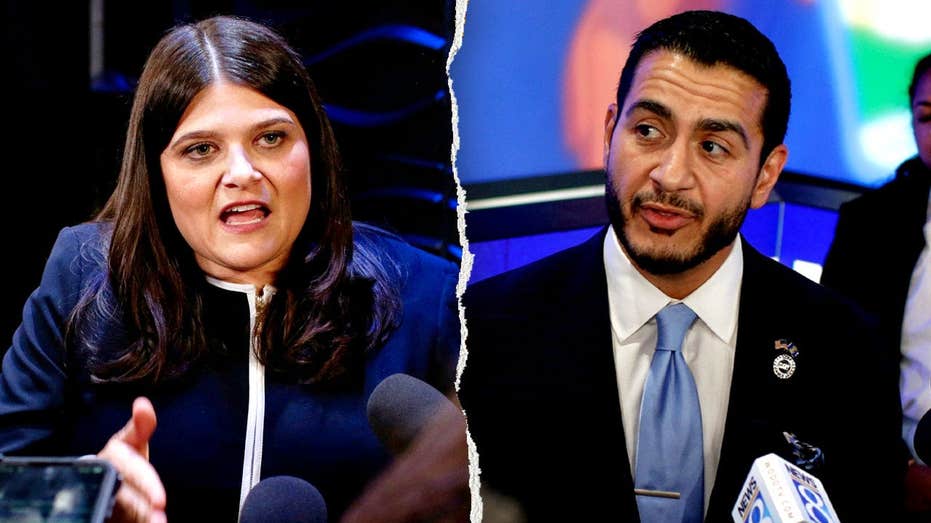
Sanders dismisses primary challenger, frames Michigan race against 'billionaire class'
Senator Bernie Sanders rejected the notion of a competitive primary in Michigan, instead framing the election as a fight against wealthy interests.
Senator Bernie Sanders has dismissed the idea of a significant primary challenge in Michigan, asserting that the real contest is not against a fellow Democrat, but against the "billionaire class." Sanders, a prominent progressive voice, indicated that the focus should be on broader economic struggles rather than intra-party disputes.
This framing suggests a strategic approach to the upcoming election, where Sanders and his allies aim to rally support around a narrative of economic inequality. By positioning the election as a conflict between ordinary citizens and wealthy elites, Sanders seeks to mobilize voters who feel disenfranchised by the current economic system.
Sanders has consistently advocated for policies that aim to redistribute wealth and power, such as increasing taxes on corporations and the wealthy, expanding social programs, and strengthening labor unions. His rhetoric in Michigan appears to be an extension of this long-standing platform, designed to resonate with voters who share these concerns.
The senator's comments come as various political figures are gearing up for the election cycle. The "billionaire class" Sanders refers to is often associated with corporate leaders and major campaign donors who, according to his perspective, wield undue influence over political decisions and economic policies.
This perspective aligns with a broader trend in progressive politics, which emphasizes the need to confront the power of large corporations and wealthy individuals. Sanders has often spoken about the need to challenge the status quo and create an economy that works for everyone, not just the wealthy.
While the specific Democratic primary challenger in Michigan was not explicitly named in the source material, Sanders's statement implies that any such opponent would be seen as a proxy for, or aligned with, the economic forces he opposes. This tactic aims to unify voters behind a common enemy, simplifying the electoral landscape into a clear dichotomy.
Experts in political strategy suggest that this type of framing can be effective in energizing a base and attracting independent voters who are concerned about economic fairness. By drawing a sharp contrast between his vision and that of the "billionaire class," Sanders attempts to define the terms of the debate and set himself apart from more moderate candidates.
Ultimately, Sanders's remarks signal a continued commitment to his core political and economic principles, suggesting that his campaign and advocacy will remain centered on the fight against perceived economic injustice and the influence of wealth in politics.
This article was written by AI based on publicly available news reporting. Original reporting by the linked source.