Spain Slams 'Selfish' EU Response to 60,000 Migrant Crossings in Ceuta
Spain criticized some EU nations' 'polarizing' reaction to 60,000 migrant arrivals in Ceuta, as Italy suspended Schengen access.
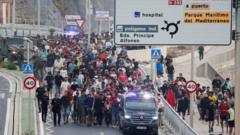
Spain has strongly condemned what it termed a "selfish, polarizing and unlawful" reaction from certain European Union countries following the recent influx of approximately 60,000 migrants from Morocco into the Spanish enclave of Ceuta. Officials stated that nearly all individuals who reached the territory on July 30 have since been returned, and the death toll has climbed to at least 67.
The situation escalated when Italy, supported by Finland and Denmark, temporarily suspended Spain's participation in the EU's border-free Schengen area, a move also urged by the Czech Prime Minister. In a letter to European Commission President Ursula von der Leyen, Spanish Prime Minister Pedro Sánchez expressed "serious concerns" about the responses of some European governments.
Sánchez asserted that Spain had swiftly restored border control and prevented unauthorized onward movement to mainland Europe within 48 hours. He noted that while most EU governments offered support and solidarity, others "attacked Spain, driven by prejudice, fake news, ignorance, or political interest." He also pointed out that Ceuta is not part of the Schengen area, adding that the EU "cannot afford this kind of selfish, polarizing and unlawful reaction."
Spain's Interior Minister Fernando Grande-Marlaska reported on Saturday that the situation in Ceuta had largely normalized, with most migrants having departed and businesses reopening. Spain has also begun deploying an inflatable maritime barrier to deter future illegal crossings. The political and diplomatic repercussions, however, continue to unfold across European capitals.
This diplomatic friction arises from chaotic scenes on Thursday when border controls in Ceuta reportedly faltered, allowing a massive surge of migrants to enter. Italian Prime Minister Giorgia Meloni had previously characterized such uncontrolled immigration as a threat to national security.
In a significant development, 22 out of the EU's 27 member states also called for emergency talks. In an open letter, they cited "serious concerns" about the events in Ceuta, welcoming the cooperation between Spain and Morocco in returning migrants. However, they emphasized that a video conference of EU interior ministers would be beneficial for agreeing on EU instruments and support to help Spain regain effective border control.
Prime Minister Sánchez has requested an urgent meeting with EU interior ministers to underscore that securing the EU's external borders is a collective responsibility shared by all member states. The incident highlights ongoing tensions and differing approaches among EU nations regarding migration management and border security.
While the immediate crisis in Ceuta appears to be subsiding on the ground, the political fallout and discussions about shared responsibility for external border security are expected to continue within the European Union.
This article was written by AI based on publicly available news reporting. Original reporting by the linked source.