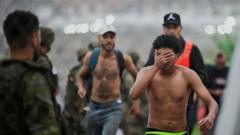
49,000 Migrants Flood Spanish Ceuta in 24 Hours; 24 Dead
Nearly 49,000 migrants entered Spain's Ceuta from Morocco in 24 hours, with at least 24 deaths reported amid chaotic border crossings.
Approximately 49,000 migrants entered Spain's North African territory of Ceuta from Morocco within a 24-hour period, according to official estimates. The influx, which occurred via land and sea, has led to chaotic scenes and resulted in the deaths of at least 24 individuals, some of whom perished while attempting to swim to the territory.
The unprecedented surge in arrivals follows a recent ruling by Spain's Supreme Court. The court determined that migrants intercepted at sea while attempting to reach Ceuta or Melilla, another Spanish exclave bordering Morocco, cannot be immediately returned to Morocco. This decision has been cited by officials as a factor contributing to the current crisis.
Spanish Prime Minister Pedro Sánchez described the situation as an "attack" on Spain's territorial integrity. He stated that the government is working urgently to return all undocumented migrants to Morocco as swiftly as possible. Reports from Thursday indicate thousands of people swimming into the city, with crossings continuing into Friday. Local media also reported that border controls appeared to have broken down.
This event has significant implications for border security in the European Union and diplomatic relations between Spain and Morocco. The sheer number of arrivals, estimated to be more than half the population of Ceuta, which stands at around 83,600, highlights the scale of the challenge. Spain has responded by deploying armed forces to reinforce security in Ceuta and Melilla, where an additional 300 to 400 crossings were reported overnight.
Prime Minister Sánchez attributed the dangerous events to criminal networks exploiting the Supreme Court's ruling and spreading "incorrect information." He indicated that Moroccan authorities are cooperating with Spain's plans to repatriate those who entered illegally. Ceuta and Melilla, historical Spanish territories dating back to the 15th century, represent the EU's only land borders with Africa and have long been points of contention and migration focal points.
Many of the migrants are young men, but the crowds also include women, children, and babies. Officials estimate that at least 7,000 of those who crossed into Ceuta in the past day are minors. The ease with which many appeared to reach the border fence, some even walking along rocks, contrasts with previous attempts that typically involved long swims from further up the coast.
European leaders have expressed concern over the situation, with some pledging to tighten border controls. The complex relationship between Spain and Morocco, which covets the two enclaves, adds another layer to the diplomatic challenges posed by this mass migration event.
Questions remain about the long-term management of this border and the effectiveness of repatriation efforts. The situation underscores the ongoing humanitarian crisis at Europe's southern borders and the complex legal and political responses it elicits.
This article was written by AI based on publicly available news reporting. Original reporting by the linked source.