Spanish PM Demands EU Meeting Over 'Selfish' Responses to Ceuta Crisis
Spain's PM calls for urgent EU meeting after 'selfish' reactions to the Ceuta migrant crisis, which saw 50,000 cross.
Spain's Prime Minister Pedro Sánchez has requested an urgent meeting of EU interior ministers following what he described as "selfish, polarising and unlawful reactions" from some member states concerning the recent mass border crossing into the Spanish enclave of Ceuta. The call comes after Sánchez confirmed that "virtually all" irregular migrants had been returned to Morocco, thereby "preventing any unauthorised onward movement towards continental Europe."
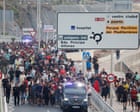
The influx of over 50,000 people into Ceuta from Morocco on Thursday and Friday resulted in at least 67 deaths, with some individuals drowning and others being crushed while attempting to cross a breakwater barrier. Although more than 48,000 people had voluntarily returned to Morocco by Friday evening, the event triggered a significant political crisis for the Spanish government.
This situation has highlighted a perceived breakdown in EU unity regarding external border policy. Notably, Italy announced on Friday evening that it would suspend its Schengen arrangements with Spain. This move was made despite Ceuta and Spain's other north African enclave, Melilla, operating under special Schengen rules designed to prevent onward movement within the zone.
Italian Foreign Minister Antonio Tajani attributed the crisis in Ceuta to the Spanish government's decision to implement a now-closed scheme for regularizing the status of over one million undocumented migrants and asylum seekers. Tajani stated that this program had incentivized human trafficking and was "profoundly wrong," a remark that drew a sharp rebuke from Spain's foreign ministry.
Sánchez's administration has been under pressure to manage the external borders of the European Union effectively. The unprecedented scale of the crossing into Ceuta has intensified debates about burden-sharing and the efficacy of current EU migration policies. The incident underscores the complex challenges faced by enclaves like Ceuta, which serve as the EU's land border with Africa.
European Commission officials have acknowledged the gravity of the situation in Ceuta, emphasizing the need for cooperation between the EU and Morocco to manage migration flows. However, the differing reactions from member states, particularly Italy's suspension of Schengen arrangements, suggest a widening rift in how the bloc approaches border security and asylum.
The Spanish government aims to use the upcoming EU meeting to foster a more unified and cooperative approach to external border management. Sánchez's office indicated a desire to discuss robust strategies that respect human rights while ensuring the integrity of the Schengen area and preventing similar crises in the future.
Questions remain about the long-term implications for EU-Morocco relations and the potential for further divergence among member states on migration policy. The events in Ceuta serve as a stark reminder of the ongoing humanitarian and political challenges at Europe's borders.
This article was written by AI based on publicly available news reporting. Original reporting by the linked source.