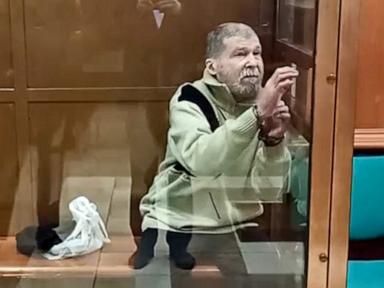
Stephen Hubbard Freed From Russian Detention; Envoy Meets Putin
Detained American Stephen Hubbard was released from Russia after U.S. special envoy Steve Witkoff met with President Vladimir Putin.
Stephen Hubbard, a 74-year-old American, has been released from Russian detention following a meeting between U.S. special envoy Steve Witkoff and Russian President Vladimir Putin. Hubbard, a retired teacher from Michigan, had been held by Russian forces since April 2022 when he was arrested in eastern Ukraine.
The development marks a significant diplomatic exchange, with Witkoff traveling to St. Petersburg to oversee Hubbard's release. A Kremlin aide confirmed Witkoff's arrival in the city on Wednesday morning ahead of the scheduled meeting with Putin. This event underscores ongoing, albeit complex, diplomatic channels between the United States and Russia.
According to a readout published by the Kremlin, Witkoff expressed gratitude to Putin for Hubbard's freedom, stating, "Because of you, he's going home to his family." The readout described Putin's actions as humanitarian. Russian presidential envoy Kirill Dmitriev was seen greeting Witkoff at Pulkovo Airport.
President Donald Trump later stated on social media that he had personally requested Hubbard's release from Putin in a phone call last week. Trump indicated that Hubbard is now en route home to his family and emphasized that no reciprocal concessions were made by the U.S. for his release, describing it as an "unprecedented situation for Russia."
Trump also defended his administration's recent decision to waive certain sanctions on Russia, suggesting that their presence would have hindered negotiations for Hubbard's release. Witkoff's arrival in St. Petersburg coincided with broader discussions regarding the potential release of multiple Americans detained in Russia, according to U.S. officials and sources familiar with the matter. These talks reportedly focused on Hubbard and other U.S. citizens held on charges the U.S. administration considers questionable.
Hubbard had been residing in eastern Ukraine since approximately 2014, where he taught English and had a personal relationship. Russian authorities accused him of acting as a mercenary and fighting for Ukraine, leading to a sentence of nearly seven years in prison. His family and U.S. officials have maintained that these charges are false, and the State Department officially designated him as wrongfully detained.
The circumstances of Hubbard's arrest and detention highlight the complex and often fraught interactions between foreign nationals and Russian authorities, particularly in the context of the ongoing conflict in Ukraine. The U.S. government's designation of Hubbard as "wrongfully detained" signals its belief that the legal proceedings against him were politically motivated or lacked sufficient legal basis.
The successful negotiation for Hubbard's release, without an apparent quid pro quo, could set a precedent for future diplomatic efforts concerning Americans detained abroad. However, the broader implications for U.S.-Russia relations, especially in light of the waived sanctions and ongoing geopolitical tensions, remain to be seen.
This article was written by AI based on publicly available news reporting. Original reporting by the linked source.