Strait of Hormuz sees seized ships, shark fishermen as fragile calm returns
BBC journalists visited Iran's side of the Strait of Hormuz, finding seized ships and returning fishermen after a conflict-driven lull.
International journalists have visited Iran's side of the Strait of Hormuz for the first time since the conflict with the US and Israel intensified, observing a return of fishermen to the waters amid an "uneasy calm" following a ceasefire.
The Strait of Hormuz, a critical global shipping lane, became a focal point of conflict after the US and Israel launched attacks on February 28. Iran's Islamic Revolutionary Guards Corps (IRGC) responded by targeting commercial ships attempting to transit without permission, leading to significant disruptions and a surge in oil prices.
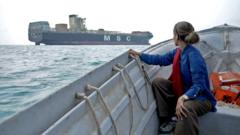
On the docks of Bandar Abbas, fishermen are returning to their trade, unloading catches that include sharks and large fish. This marks a return to normalcy after weeks where many avoided the waters due to the perceived danger. The BBC observed two container ships seized by the IRGC in April, the MSC Francesca and the Epaminondas, still held despite the ongoing ceasefire. The IRGC had cited endangerment of maritime security and operational permit violations as reasons for their seizure.
The partial reopening of the strait, under a ceasefire agreement that is mostly holding, has allowed maritime activity to resume. However, dozens of other cargo ships remain anchored offshore, awaiting clearance from Iranian authorities to pass through. The presence of these waiting vessels underscores the fragile nature of the current calm.
Life in Bandar Abbas, a key Iranian city on the strait, has been directly impacted by the conflict. For months, the waters were deemed too dangerous for fishing, forcing many local fishermen to stop working. Those who did venture out did so with the knowledge that they were entering a potential battlefield.
The historical significance of the Strait of Hormuz is evident in landmarks like the 16th-century fortress overlooking Hormuz Island. This fortress served as a testament to centuries of strategic importance and historical control battles, most notably when Shah Abbas I of Persia expelled the Portuguese in 1622.
The BBC's journey through the strait offered a close-up perspective on the war's effects. The sight of the seized container ships, symbols of the heightened tensions and IRGC's assertive actions, contrasted with the returning fishing boats. This juxtaposition highlights the complex reality of the region.
While the ceasefire has brought a degree of peace, the continued detention of the seized vessels and the backlog of cargo ships indicate that full normalization of traffic through the Strait of Hormuz has not yet been achieved, leaving lingering questions about future maritime security and trade.
This article was written by AI based on publicly available news reporting. Original reporting by the linked source.