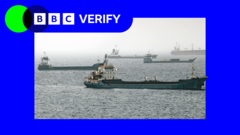
Strait of Hormuz Ship Traffic Halved After New US-Iran Strikes
Vessel traffic through the Strait of Hormuz plummeted by nearly 50% following recent US-Iran strikes, impacting global trade routes.
Maritime traffic through the critical Strait of Hormuz has significantly decreased following a series of retaliatory strikes between the United States and Iran, stemming from an attack on three tankers earlier this week. On Wednesday, only 23 tankers and cargo ships navigated the vital Gulf waterway, a stark contrast to the 47 recorded a week prior, according to maritime intelligence firm Kpler.
The recent escalation follows an attack on three commercial vessels that were utilizing a US-recommended route through Omani waters. Iran has consistently maintained that the sole safe passage lies through its own territorial waters, a claim contested by international maritime authorities.
For decades, the Strait of Hormuz has served as a crucial artery for global commerce, facilitating the passage of over one-fifth of the world's oil and gas supplies, alongside shipments of fertilizers and other essential goods. Prior to the recent hostilities, an average of 138 vessels transited the strait daily, as per data from the Joint Maritime Information Center (JMIC).
The current decline in traffic has significant implications for global energy markets and supply chains. The Strait of Hormuz is a chokepoint through which a substantial portion of the world's oil moves, and any disruption can lead to price volatility and shortages.
This latest downturn is part of a volatile pattern that has characterized the strait's traffic in recent months. Following the initial US and Israeli strikes on Iran on February 28, traffic had fallen to a minimal level, with Iran effectively controlling passage through attacks and mine-laying, prompting a US blockade of Iranian ports. A peace deal signed on June 17 aimed to re-open the strait, leading to a temporary increase in traffic, peaking at 72 ships on June 24.
However, tensions resurfaced as Iran asserted its right to control passage and impose fees, a stance opposed by the US and its allies who advocate for free and open transit. Iran subsequently designated specific lanes near its coast, while the JMIC recommended an alternative route through Omani waters.
The Omani route saw increased usage, surpassing transits via the Iranian route, until two ships in Omani waters were struck on June 25 and 27. Iran warned all vessels to adhere to its approved routes. In response, President Donald Trump accused Iran of violating a truce, and the US military conducted strikes on Iranian targets. Iran, in turn, accused the US of breaching their interim agreement and retaliated with strikes on US-linked targets.
The recent attacks on the three ships have now driven down the number of vessels using the Omani route, contributing to the overall steep decline in traffic, leaving the long-term impact on global shipping routes uncertain.
This article was written by AI based on publicly available news reporting. Original reporting by the linked source.