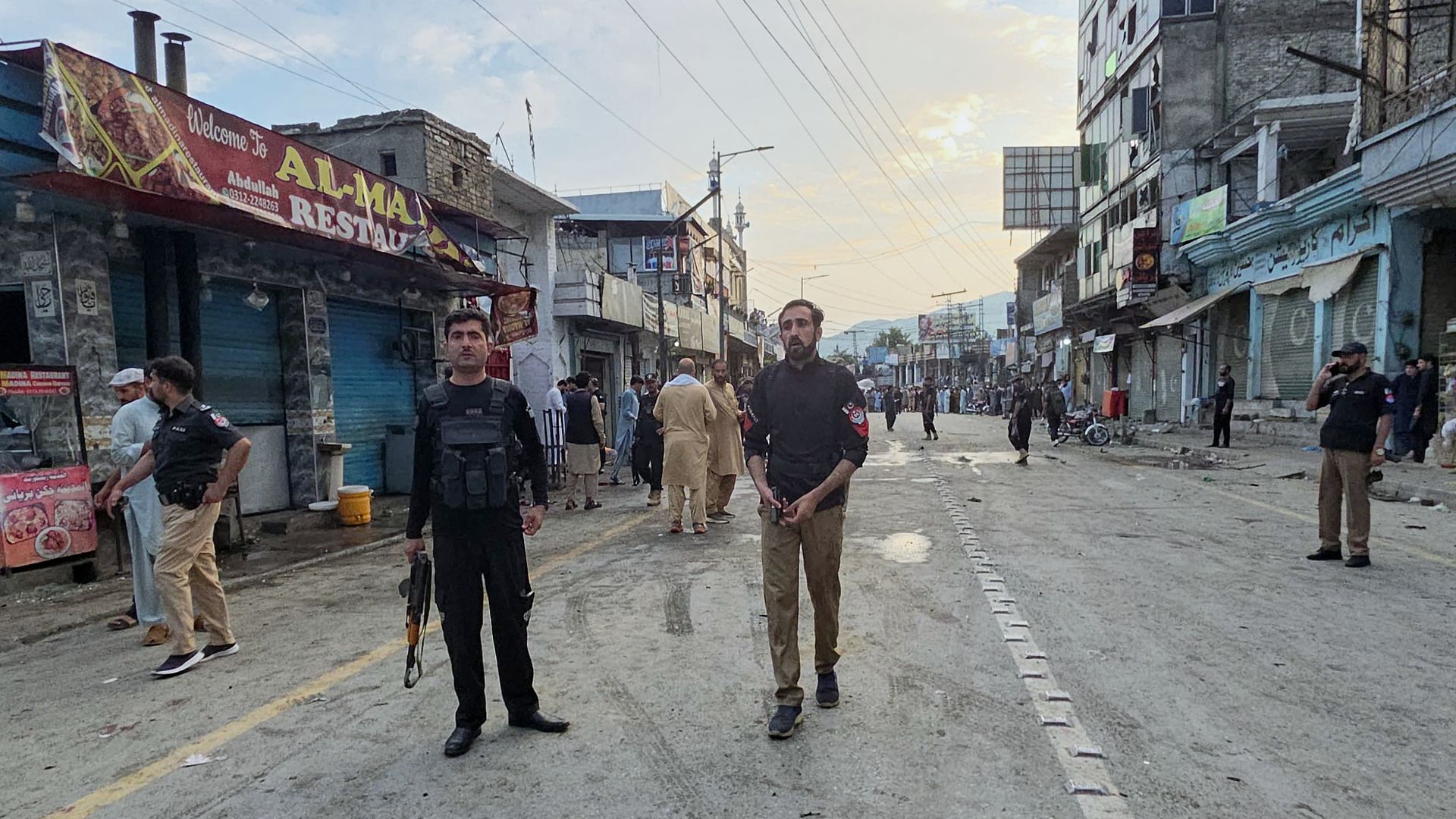
Suicide Bomber Kills 14 at Pakistan Anti-Militant Rally
A suicide bombing at an anti-militant rally in northwestern Pakistan killed at least 14 people, officials reported.
At least 14 people were killed and numerous others injured in a suicide bombing that struck an anti-militant rally in northwestern Pakistan on Saturday, according to officials.
The attack targeted protesters who had gathered to demonstrate against the rising influence of militant groups in the region. The blast occurred as the rally was underway, sending shockwaves through the assembled crowd and emergency services rushing to the scene.
Details emerging from the site indicate that the bomber detonated explosives amidst the protesters. Initial reports from local authorities confirmed the casualty figures, with fears that the number of dead and wounded could rise. Emergency responders have been working to transport the injured to nearby hospitals for treatment.
The incident raises serious concerns about the security situation in the region and the ability of militant factions to carry out large-scale attacks. It also highlights the ongoing challenges faced by Pakistani authorities in combating extremism.
This attack comes amid a period of heightened security concerns in Pakistan, particularly in the northwestern areas bordering Afghanistan, which have seen an increase in militant activity. The government has been under pressure to address the resurgence of extremist groups that were once largely suppressed.
Officials have condemned the bombing, vowing to investigate the incident and bring those responsible to justice. However, no group has immediately claimed responsibility for the attack, leaving authorities to explore potential perpetrators and motives.
Analysts suggest that such attacks aim to destabilize the region and undermine efforts to restore peace and security. The targeting of an anti-militant rally specifically could be seen as an attempt to intimidate those who oppose extremist ideologies.
The long-term implications of this bombing are significant, potentially leading to increased security measures, renewed calls for military action against militant networks, and further impacting the fragile peace in the affected areas. The incident also poses questions about intelligence gathering and the effectiveness of existing security protocols.
This article was written by AI based on publicly available news reporting. Original reporting by the linked source.