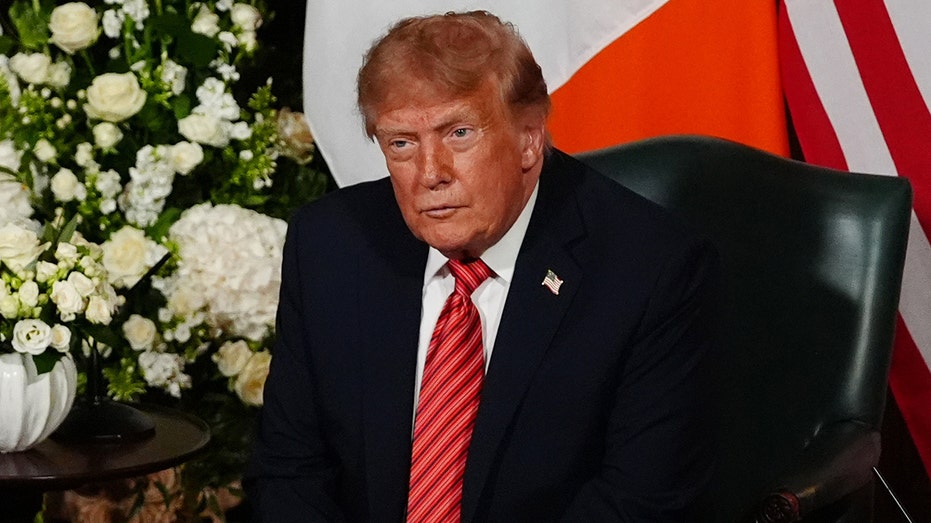
Trump: China 'spies' on US; imagery linked to Iran attack
Former President Trump asserted China spies on the U.S. following a report linking Chinese satellite imagery to a deadly Iran attack.
Former President Donald Trump has stated that China engages in spying on the United States. His remarks came in the wake of a report indicating that Chinese satellite imagery was utilized in connection with a recent deadly attack carried out by Iran.
This assertion from the former president adds a new layer to ongoing geopolitical tensions and intelligence concerns surrounding China's global surveillance capabilities. The report, which has not been independently verified by this news outlet, suggests a potentially significant breach or exploitation of U.S. intelligence by a rival nation, or at least the use of technology that could be leveraged for such purposes.
The specific details regarding the nature of the Chinese imagery and its exact role in the Iran attack remain unclear. However, the implication is that data or surveillance capabilities originating from China may have played a part in the planning or execution of the offensive operation. This raises questions about the security of sensitive information and the reach of foreign intelligence agencies.
Trump's public statement on the matter underscores his consistent stance on what he perceives as threats from China. His administration often highlighted concerns about China's trade practices, intellectual property theft, and military expansion. This latest commentary suggests that he views China's intelligence-gathering activities as a direct threat to American national security.
The potential implications of this report, if substantiated, are far-reaching. It could lead to increased scrutiny of Chinese technology companies, stricter export controls, and a re-evaluation of intelligence-sharing protocols. Furthermore, it could impact diplomatic relations between the U.S. and China, potentially exacerbating existing trade disputes and security disagreements.
Intelligence agencies globally are constantly working to monitor and counter foreign espionage efforts. The alleged use of Chinese imagery in relation to the Iran attack highlights the complex and interconnected nature of modern intelligence gathering. Satellites, once primarily the domain of state actors for military and scientific purposes, are increasingly accessible, raising new challenges for national security.
Experts in international relations and security have previously warned about the growing sophistication of China's surveillance technology and its potential to be used for intelligence purposes. The report, coupled with Trump's strong reaction, is likely to fuel further debate and calls for action within the U.S. national security community.
As the situation develops, further information is expected to emerge regarding the veracity of the report and the extent of China's alleged involvement. The U.S. government has yet to issue an official statement confirming or denying the details presented in the report, leaving several questions unanswered about the precise nature of the intelligence and its implications for U.S. foreign policy and security.
This article was written by AI based on publicly available news reporting. Original reporting by the linked source.