Trump Compares Iran War Deaths to Past Conflicts, Appears to Downplay Toll
President Trump posted social media comparisons of Iran war fatalities to past conflicts, appearing to downplay the rising death toll.
President Donald Trump has drawn comparisons between the death toll in the ongoing conflict in Iran and several past wars, in what appears to be an effort to contextualize and downplay the rising number of American fatalities. The president shared statistics on social media detailing the number of deaths and lengths of previous conflicts, including Afghanistan, Iraq, Vietnam, and Korea, alongside figures from the four-month Iran conflict, which has resulted in 18 American deaths.
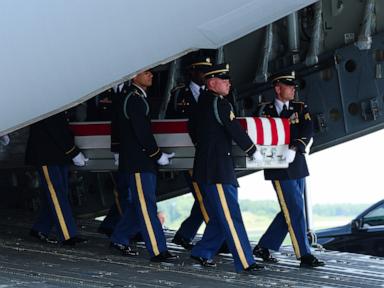
These posts come as the Iran conflict, which the president has consistently referred to as a "military conflict" rather than a "war," has seen a recent surge in American casualties. Just days before Trump's social media posts, four additional service members were killed in Iranian attacks, marking the first American fatalities since a ceasefire agreement collapsed two weeks prior. The president attended a dignified transfer ceremony for the fallen soldiers at Dover Air Force Base on Wednesday and has vowed retaliation.
The conflict intensified this month after a period of reduced hostilities, reigniting questions about its scope and duration. The U.S. and Iran have resumed daily strikes, and Iran has impacted oil flow by blocking access to the Strait of Hormuz. The war, which began in late February with a joint campaign by the U.S. and Israel, has faced public disapproval and concerns among some Republicans.
Critics fear the protracted fighting could lead to a prolonged U.S. military commitment, sustain elevated gasoline prices, and become a political liability in the upcoming November midterm elections. Secretary of Defense Pete Hegseth informed senators on Tuesday that the estimated cost of the war has reached $37.5 billion. Hegseth requested an additional $67 billion in funding and faced questioning from Democrats regarding the war's progress, objectives, strategies, and justifications.
These reported costs may not encompass the full financial impact, including expenses for rebuilding damaged American bases. Reports indicate that the Army has significantly rationed funds and made substantial cuts to training as the war's expenses mount. This financial strain adds another layer of concern as the conflict continues.
President Trump has repeatedly sought to frame the costs of the Iran campaign as less significant when compared to other foreign engagements. In a recent conversation with the New York Post, Trump reportedly acknowledged the deaths of service members as regrettable but immediately contrasted them with the casualties of previous wars.
This approach to framing the conflict's human and financial costs has drawn scrutiny, particularly as the number of American service members killed has risen. The administration's narrative appears to be shifting to emphasize the relative scale of losses in comparison to historical conflicts.
As the situation in Iran remains volatile, with ongoing strikes and disruptions to critical waterways, the public and political discourse continues to grapple with the war's escalating costs and uncertain trajectory. The administration's strategy of drawing parallels to past wars suggests a potential effort to manage public perception amidst growing concerns.
This article was written by AI based on publicly available news reporting. Original reporting by the linked source.