Trump Declares Iran Deal 'Over,' Calls Leaders 'Scum' After Strikes
President Trump declared an interim agreement with Iran over following recent attacks, labeling Iranian leaders 'scum' and 'sick people.'
President Donald Trump announced Wednesday that he believes the interim agreement reached with Iran last month is effectively over, following a significant escalation of conflict between the U.S. and Iran. The declaration came after a series of attacks on commercial ships in the Strait of Hormuz, which the U.S., Qatar, and Saudi Arabia attributed to Iranian forces, though Tehran has denied the allegations.
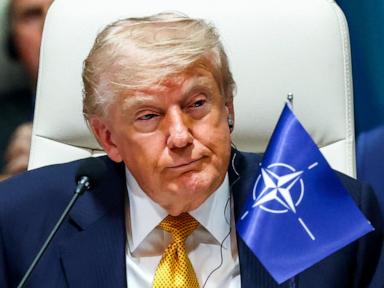
Trump, who was attending the NATO summit in Ankara, Turkey, met with top advisors on Tuesday to discuss the U.S. response to the attacks. The interim agreement, a Memorandum of Understanding (MOU), had aimed to de-escalate tensions and pave the way for a final peace deal. It included provisions for reopening the Strait of Hormuz, lifting a U.S. naval blockade, and Iran committing not to pursue nuclear weapons.
Speaking to reporters in Ankara, Trump expressed strong condemnation of Iran's leadership. "For me, I think it's over," Trump stated, adding, "I don't want to deal with them anymore. They're scum. You know what scum is? They're scum. They're sick people. They're led by sick people."
Despite the harsh rhetoric and the apparent dissolution of the MOU, Trump suggested that U.S.-Iranian negotiations could continue. He indicated that his negotiators, including Steve Witkoff and Jared Kushner, were prepared to keep talking if they wished, though he expressed skepticism about the utility of such discussions given his view of Iran's leadership. The president also stated he did not care if talks resumed after the funeral proceedings for Supreme Leader Ayatollah Ali Khamenei.
The 14-point MOU, signed last month, committed signatories to reopening the Strait of Hormuz for commercial traffic and involved the U.S. lifting its naval blockade of Iranian ports. In return, Iran reiterated its commitment not to develop nuclear weapons. The agreement also included provisions for Iranian oil sales and the establishment of a $300 million reconstruction fund for Iran. A key component was a 60-day cessation of hostilities, including between Israel and Hezbollah, to allow for negotiations on a final deal covering issues like Iran's nuclear program.
CENTCOM reported striking more than 80 Iranian targets on Tuesday in response to the escalating aggressions. The U.S. has previously accused Iran of orchestrating attacks on commercial vessels, leading to heightened tensions in the critical shipping lane.
When the MOU was initially signed, President Trump had described the deal as achieving "everything we set out to accomplish, everything and much more." However, significant challenges remained, particularly concerning the status of Iran's nuclear program, which was a central point of contention in the ongoing negotiations.
The breakdown of the interim agreement raises concerns about the future of the Strait of Hormuz, a vital artery for global oil transport, and the broader implications for regional stability. The U.S. has not yet outlined specific next steps following Trump's declaration, leaving questions about the path forward for U.S.-Iran relations and the potential for further military engagement.
This article was written by AI based on publicly available news reporting. Original reporting by the linked source.