Trump Halts 'Hostile' South Korea Military Drills Due to Cost
President Trump announced the downscaling of joint US-South Korea military exercises, citing their 'hostile' nature and high expense.
President Donald Trump announced Wednesday that joint military exercises between the United States and South Korea will be significantly scaled back, calling the drills "hostile" and excessively expensive. The decision marks a notable shift in long-standing military cooperation between the two allied nations.
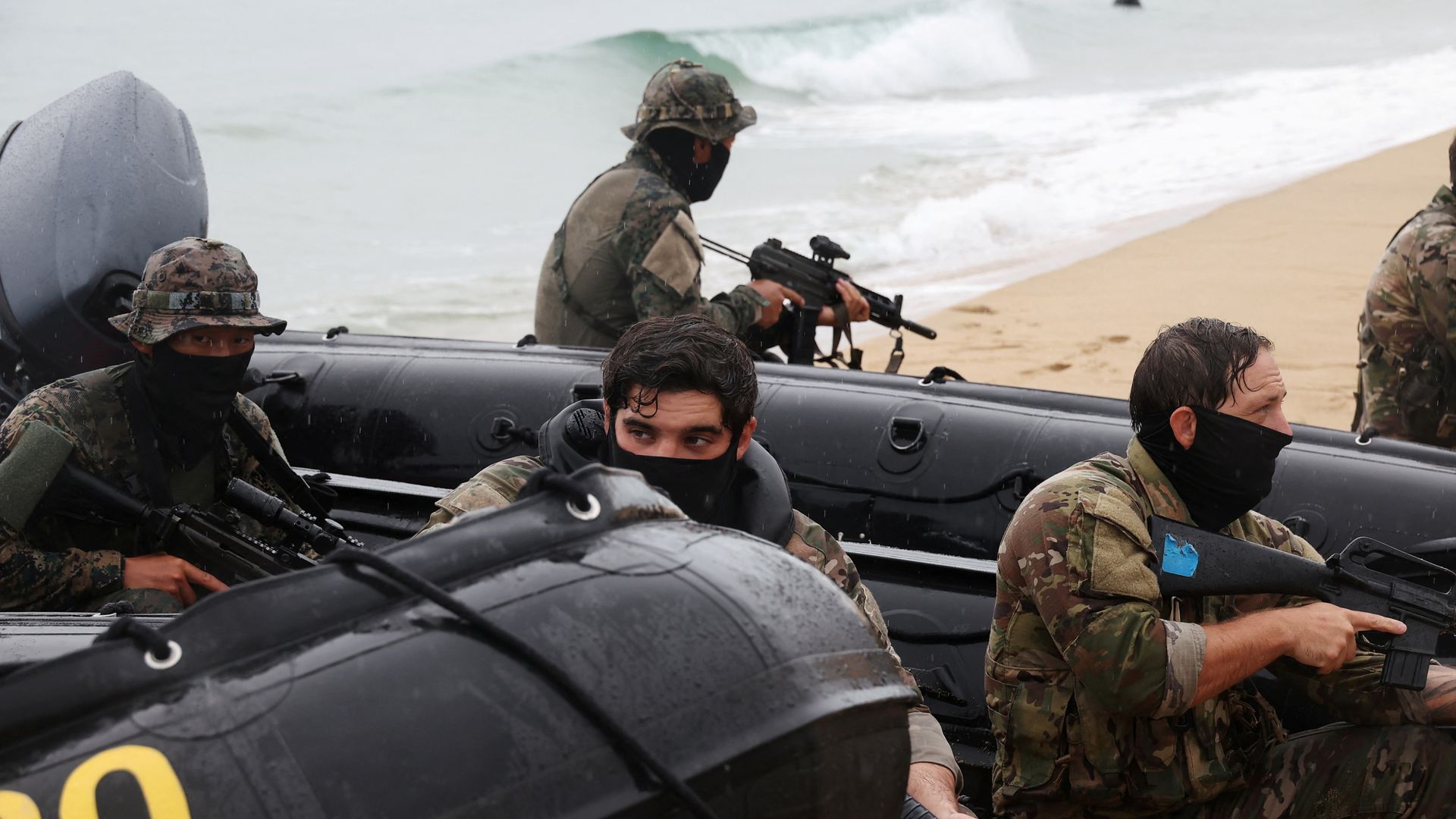
These large-scale exercises have been a cornerstone of the US-South Korea alliance for decades, intended to maintain readiness and deter potential aggression from North Korea. The drills typically involve tens of thousands of American and South Korean troops, along with advanced military hardware, simulating responses to various wartime scenarios.
Trump, speaking to reporters at the White House, stated that the exercises are a "tremendous" drain on finances. He characterized the drills as provocative and unnecessary, suggesting they were contributing to heightened tensions rather than de-escalating them. The President did not specify which exercises would be affected or the exact scale of the reduction.
The move comes amid ongoing diplomatic efforts to denuclearize the Korean Peninsula, particularly following Trump's summit with North Korean leader Kim Jong Un. While the President framed the decision as a cost-saving measure and a de-escalatory step, it raises questions about the future posture of US military commitment in the region and its implications for regional security.
Previous administrations have viewed these joint exercises as crucial for maintaining deterrence against North Korea's nuclear and missile programs. Critics of the downscaling worry that it could be perceived by Pyongyang as a sign of weakening resolve from the US and South Korea, potentially emboldening North Korea. The financial cost of maintaining a significant US military presence and conducting complex training operations in South Korea has been a point of discussion for some time, but the direct linking of exercise reduction to their 'hostile' nature is a distinct framing.
South Korea's Ministry of National Defense has not yet issued a formal statement regarding Trump's announcement. However, the potential reduction in joint drills could necessitate adjustments to South Korea's own defense planning and readiness procedures. The alliance has historically been a critical component of stability in Northeast Asia, and any significant alteration to its military posture is likely to draw scrutiny from regional powers.
Analysts are observing closely how this decision will be interpreted by both allies and adversaries. The long-term impact on the readiness of combined forces and the strategic balance in the region remains to be seen. The administration's emphasis on cost-effectiveness in defense partnerships is a recurring theme, but the specific nature of these exercises, deemed 'hostile' by the President, suggests a deeper reassessment of their strategic utility.
Further details on the scope and timeline of the exercise adjustments are expected to emerge as military planners begin to implement the President's directive. Unresolved questions linger about the precise criteria for future exercises and the potential for renewed, scaled-up drills should circumstances change.
This article was written by AI based on publicly available news reporting. Original reporting by the linked source.