Trump Heralds Iran Deal, but Questions and Risks Linger
President Trump announced a deal to end US-Iran hostilities, opening the Strait of Hormuz, but details remain scarce and compliance is uncertain.
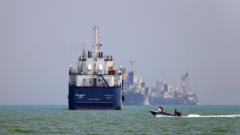
President Donald Trump announced a significant diplomatic breakthrough Sunday, declaring a deal had been reached to end hostilities between the United States and Iran, which he stated would reopen the vital Strait of Hormuz to commercial shipping.
The announcement, made via social media, provides the U.S. president with a potentially welcome diplomatic achievement, though it comes wrapped in considerable uncertainty regarding the specifics and future implications.
Trump proclaimed that the Strait of Hormuz would be open to commercial shipping and that the U.S. would lift its naval blockade, exclaiming "Let the oil flow!" He further asserted that, unlike previous administrations, he had secured a "great deal" that would bring peace and security to the region. This hyperbolic language echoes his previous pronouncements on other diplomatic efforts.
Details of the agreement remain scarce. U.S. Vice President JD Vance indicated that Iran would be prevented from possessing nuclear weapons under the terms of the deal and that U.S. verification of compliance would be possible. However, critical questions persist regarding the restrictions on Iran's uranium enrichment activities and the fate of its existing stockpile of highly enriched uranium.
These crucial details are expected to be addressed in subsequent negotiations and technical talks, with a 60-day extension of the current ceasefire providing a window for these discussions. Decades of past efforts to curb Iran's nuclear ambitions have shown that such agreements are fraught with challenges and no guarantees of success.
Underscoring the potential for complications, Iran's Supreme National Security Council released a statement indicating that final negotiations would be postponed until after the implementation of the "other party's commitments under the memorandum." The interpretation and execution of these commitments by both sides will be a key factor in the durability of the agreement.
Energy market experts have cautioned that restoring oil flow through the Strait of Hormuz to pre-war levels is unlikely to be an immediate process. The significant backlog of oil tankers waiting to transit the waterway presents a logistical challenge that will require time to resolve.
The announcement comes at a time when the U.S. economy has shown resilience, defying earlier predictions. The long-term success of this new accord with Iran will hinge on the precise terms agreed upon and Iran's adherence to them, a pattern that has proven elusive in past diplomatic endeavors concerning the nation's nuclear program.
This article was written by AI based on publicly available news reporting. Original reporting by the linked source.