Trump: Iran deal averted 'Herbert Hoover' presidency, allows some missiles
President Trump said an Iran deal prevented economic catastrophe, comparing the alternative to a 'Herbert Hoover' presidency and acknowledging Iran may keep some missiles.
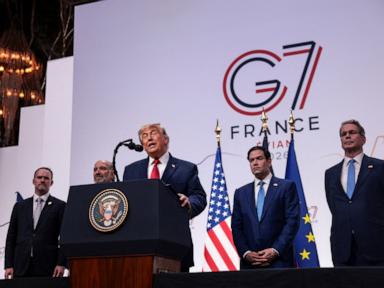
President Donald Trump stated Wednesday that a recently finalized memorandum of understanding with Iran was crucial to prevent economic catastrophe, likening the alternative to a "Herbert Hoover presidency." Speaking at a press conference on the sidelines of the G7 Summit in Évian, France, Trump expressed his desire to avoid the economic downturn associated with the 31st U.S. president.
Trump's remarks highlighted his motivation for securing the agreement, emphasizing the positive impact on the stock market when discussions of peace emerged. He suggested that continuing the previous course of action could have led to a significant economic downturn, which he was determined to prevent.
The president's comments came as details of the agreement, signed Wednesday night in France, were being communicated to reporters by senior U.S. officials, though the White House had not yet published the full text. Trump described the deal as both "historic" and "strong," while also indicating a willingness to resume bombing Iran if the country violates its terms, particularly regarding nuclear weapons.
"If it doesn't get done in 60 days, it's all right. We go back to bombing. You know, I don't want to do that because it's so good. But, we might have to because we're never going to let them have a nuclear weapon, but they've agreed not to," Trump said.
Adding another layer to the complex agreement, Trump also indicated openness to Iran maintaining a stockpile of ballistic missiles. He justified this stance by citing the presence of similar weapons in neighboring Gulf states, such as Saudi Arabia, suggesting it would be unfair to deny Iran missiles while allowing others to possess them.
"We'll be working on a parallel effort with the Gulf nations to address non-nuclear issues, such as the conventional ballistic missiles," Trump stated, acknowledging the difficulty in arguing against Iran having missiles when its neighbors do.
This position appears to mark a significant shift in U.S. policy, as previous administrations have sought to limit Iran's missile capabilities. The specifics of the agreement regarding missile stockpiles remain unclear, pending the full public release of the document.
The dual messaging—a historic deal aimed at preventing economic crisis and nuclear proliferation, yet leaving room for potential military action and allowing for continued missile development by Iran—underscores the intricate nature of the accord and the challenges in its implementation and enforcement.
This article was written by AI based on publicly available news reporting. Original reporting by the linked source.