Trump May Release US-Iran Deal Before Friday, Vice President Vance Says
US Vice President JD Vance stated a preliminary US-Iran deal might be released before Friday, following President Trump's announcement of its signing.
A preliminary agreement to end the conflict with Iran could be released by U.S. President Donald Trump before Friday, according to U.S. Vice President JD Vance. This statement comes after President Trump himself announced that the deal had already been signed.
The memorandum of understanding (MOU) between the United States and Iran is described by Vance as a brief, general document approximately a page and a half in length. Senior U.S. officials have begun to share specific details, indicating that the Strait of Hormuz will reopen on Friday, the same day the agreement is scheduled to be formally signed in Geneva.
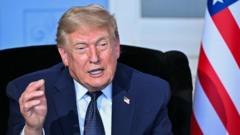
President Trump is currently attending the G7 summit in France, where a special session focused on Iran is planned for Tuesday. This session will include leaders from Egypt, Qatar, and the United Arab Emirates. On Monday, during discussions with French President Emmanuel Macron, Trump expressed his satisfaction, stating "I am very happy to say it's signed, the deal is all signed," referring to the preliminary agreement.
U.S. officials confirmed that the agreement was electronically signed by President Trump, Vice President Vance, and Iranian parliamentary speaker Mohammad Bagher Ghalibaf. Technical discussions concerning Iran's nuclear program are anticipated to commence this week. Any potential relief from sanctions or the release of assets will be contingent upon Iran fulfilling its obligations as stipulated in the deal.
Vice President Vance elaborated to NBC News that nuclear inspectors will be permitted to return to Iran as part of the agreement. He highlighted a key provision: "One of the core parts of the agreement is that the [International Atomic Energy Agency] and the United States are going to help Iran destroy the highly enriched stockpile - and that's something that's spelled out very clearly."
While President Trump had previously suggested that the agreement's details would be made public shortly after Friday's ceremony, Vance informed Fox News that the President might opt to release the accord with Tehran sooner. Vance had earlier told CNN's Jake Tapper that the MOU is a very general document, with many specifics to be determined during subsequent negotiations.
"On a number of issues, we are going to have to figure this stuff out during the technical negotiation phase, but what the MOU does is set up a framework whereby the Iranians get the benefits of the bargain by meeting their obligations under the bargain," Vance explained.
The agreement's framework is designed to provide Iran with benefits upon its adherence to the terms, establishing a structure for future negotiations and the resolution of complex issues. The reopening of the Strait of Hormuz signifies a critical de-escalation of tensions in a vital global shipping lane.
This article was written by AI based on publicly available news reporting. Original reporting by the linked source.