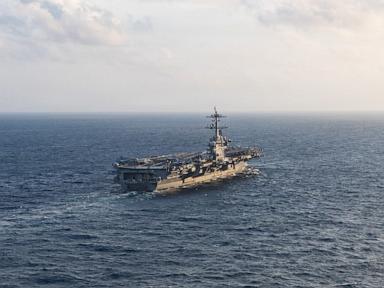
Trump Orders Navy to Dump Advanced Tech, Allows Foreign Warship Construction
President Trump ordered the Navy to revert to older technologies on aircraft carriers and permit foreign shipyards to build U.S. warships.
President Donald Trump signed two proclamations on Thursday, enacting significant changes for the U.S. Navy and imposing new tariffs on drones. The directives aim to revert aircraft carrier technology to older systems and allow, on a limited basis, for American warships to be constructed in foreign shipyards.
The proclamations, signed on August 13, 2026, mark a shift away from advanced technologies the administration deems overly complex and costly. One directive specifically orders Defense Secretary Pete Hegseth to replace the Advanced Electromagnetic Aircraft Launch Systems and the Advanced Weapons Elevators with traditional steam and hydraulic systems on aircraft carriers. President Trump has previously voiced his dissatisfaction with the electric catapults, criticizing their complexity and cost.
In addition to the technological rollback, the directives also permit foreign shipbuilders to construct American warships. According to a White House fact sheet, this measure is intended to be temporary and will allow foreign entities to build up to two ships in their home shipyards. This is contingent on substantial and durable investments into American shipyards and training an all-American workforce. The objective is to bridge gaps on a quick turnaround basis, while simultaneously revitalizing domestic shipbuilding capabilities.
The decision to allow foreign construction comes as the administration seeks to bolster the Navy's fleet and address potential shipbuilding capacity issues. Establishing a fifth Naval shipyard was also part of the directive, suggesting a broader strategy to enhance domestic naval production capacity alongside the temporary foreign allowance. The specifics of how this will be implemented and monitored are expected to be detailed by the Defense Department.
In parallel, President Trump also issued a proclamation imposing “ad valorem” tariffs on drones and drone parts. This move is justified by the administration as a necessary measure to address the “national security threat” posed by these devices. The tariffs are scheduled to take effect 21 days after the signing, with specific rates varying based on the sensitivity of the components and the size of the drone.
Tariffs on "particularly sensitive" drones will be set at 100%, while smaller drones with less pressing security concerns will face a 25% tariff. For drone components deemed "not particularly sensitive," the tariffs will come into effect 180 days after signing. The administration has also targeted specific trading partners, imposing a 15% tariff on drones and components originating from the European Union, Japan, Liechtenstein, the Republic of Korea, Switzerland, and Taiwan. The United Kingdom will face a 10% tariff on some drone imports.
These measures arrive amid ongoing global trade tensions and concerns over supply chain security, particularly in advanced technology sectors. The administration's focus on both national security and domestic industrial capacity appears to be a driving force behind these recent proclamations.
Further details on the implementation of the Navy directives and the enforcement of the drone tariffs are anticipated in the coming weeks. The long-term impact on the U.S. shipbuilding industry, international trade relations, and the global drone market remains to be seen.
This article was written by AI based on publicly available news reporting. Original reporting by the linked source.