Trump Puts Himself on Midterm Ballot, Promises $5,000 Checks
Donald Trump urged supporters to vote as if he were on the ballot and promised $5,000 direct payments if Republicans retain Congress.
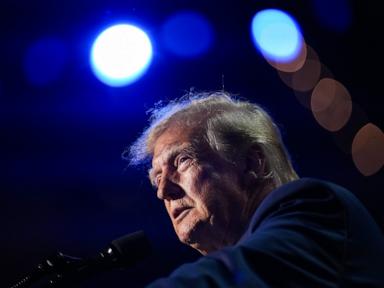
President Donald Trump placed himself at the center of the upcoming midterm elections on Thursday, urging his supporters to vote as if he were personally on the ballot. Speaking at the Republican National Convention in Dallas, Trump aimed to energize the GOP base ahead of the November elections, a period historically challenging for the party of the incumbent president.
Trump framed the midterms as a critical juncture, declaring, "This is the most important election of your lives." His message focused on touting his administration's achievements and warning against the Democratic Party, which he characterized as increasingly radical. The convention provided a platform for Republicans to solidify their closing arguments to voters.
During his address, Trump promised direct payments of $5,000 to all American adults, contingent on Republicans maintaining control of both chambers of Congress. The specifics of how this promise would be implemented and its legal feasibility remain unclear. He also invoked past challenges, warning supporters, "You will be going through hell just like we did two years ago" if Republicans lose.
The convention featured sharp critiques of Democrats from Republican speakers. House Majority Whip Rep. Tom Emmer stated, "This is an election between common sense and communism," while Sen. Tim Scott of South Carolina asserted that Democrats "hate our culture" and "what it means to be an American." These remarks underscore the party's strategy to portray the midterms as a stark choice.
In a notable moment, Democratic Sen. John Fetterman of Pennsylvania appeared via video, offering unexpected criticism of his own party while endorsing Republican Sen. Dave McCormick. Fetterman identified himself as a "common-sense Democrat" who rejects "extremes and socialism and that anti-American way of life," a statement that highlighted internal party divisions.
Many Republicans in competitive districts attended the convention to align themselves with Trump and the party's platform. However, some vulnerable incumbents, such as Sen. Susan Collins of Maine, opted not to attend, remaining in their home states. The presence of more than a dozen Republicans from battleground districts signaled a unified effort to leverage the convention's visibility.
Trump's speech emphasized his administration's economic successes, which he described as "the most successful two years, financially and every other way, in the history of the presidency." This narrative aims to counter the traditional midterm trend where the president's party often faces losses.
The convention also served as a platform for discussing the potential consequences of a Democratic victory. Trump warned that if Republicans lose, "every bill becomes a ransom negotiation," suggesting a future of political gridlock and obstruction.
This article was written by AI based on publicly available news reporting. Original reporting by the linked source.