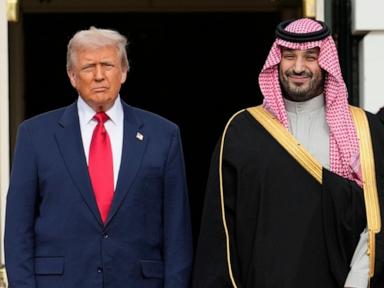
Trump Sends Saudi Nuclear Deal to Congress, Ties it to Abraham Accords
The Trump administration formally sent a U.S.-Saudi nuclear agreement to Congress, but it remains contingent on Saudi Arabia joining the Abraham Accords.
The Trump administration formally transmitted a proposed nuclear energy deal with Saudi Arabia to Congress on Monday, a move that maintains the agreement's dependence on the Kingdom joining the Abraham Accords. The administration official reiterated that President Trump's stance on this condition remains unchanged.
The landmark U.S.-Saudi nuclear agreement was finalized last month under Section 123 of the U.S. Atomic Energy Act. The deal allows the United States to partner with Saudi Arabia in developing its civil nuclear energy program. The transmission to Congress initiates a review period of 90 continuous session days for the Senate Foreign Relations Committee and the House Foreign Affairs Committee, although this review can be paused.
U.S. Energy Secretary Chris Wright and Saudi Minister of Energy Prince Abdulaziz bin Salman had signed the agreement on July 22. However, the day after its finalization, President Trump introduced a new stipulation: Saudi Arabia must join the Abraham Accords for the nuclear deal to proceed. This condition was not part of the original agreement.
Joining the Abraham Accords would require Saudi Arabia to normalize relations with Israel, a significant diplomatic shift that the Kingdom has historically resisted without the prior recognition of a Palestinian state. The administration official's confirmation on Tuesday underscores the President's commitment to this linkage, despite Saudi Arabia making no public indication of willingness to join the Accords.
The timing of the transmission remains unclear, as the agreement was finalized over a month ago and the conditionality has been publicly known since late July. It is not immediately apparent why the administration chose this specific moment to formally send the text to Capitol Hill.
U.S. officials had previously acknowledged that the agreement permits Saudi Arabia the possibility of enriching uranium domestically in the future. This aspect has raised concerns among some observers regarding nuclear weapons proliferation. However, President Trump has publicly stated that the deal explicitly prohibits uranium enrichment.
"There will be no enrichment of material!" Trump wrote in a social media post last month, addressing potential proliferation worries. The White House has not elaborated on whether the current agreement includes specific safeguards to prevent diversion of nuclear materials for weapons purposes, beyond the general prohibition on enrichment.
The transmission of the proposed nuclear agreement to Congress was initially reported by The Wall Street Journal. The U.S.-Saudi nuclear pact, finalized last month, represents a significant step in energy cooperation but remains subject to the broader geopolitical conditions set by the Trump administration.
This article was written by AI based on publicly available news reporting. Original reporting by the linked source.