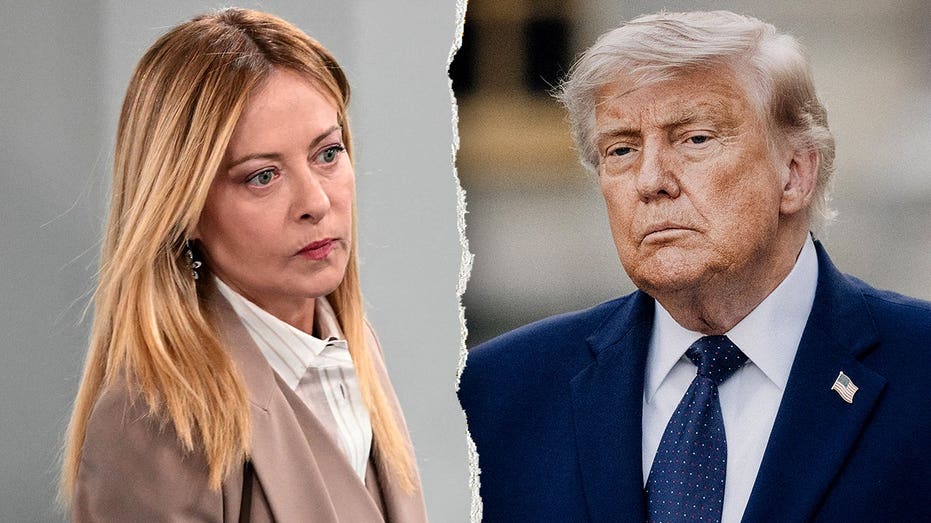
Trump's Feuds With Italy, Israel Leaders Highlight Personality-Driven Foreign Policy
President Trump's personal clashes with Italian PM Meloni and Israeli leaders underscore how his temperament shapes international relations.
President Donald Trump's foreign policy appears increasingly shaped by personal animosities, as evidenced by recent public disagreements with leaders in Italy and Israel. The escalating spat with Italian Prime Minister Giorgia Meloni, who accused the former president of fabricating a story about their past interactions, and critical commentary from Israel's top newspaper regarding his approach to the Iran deal, highlight a pattern of personality-driven diplomacy.
These incidents suggest that Trump's relationships with international counterparts can swiftly sour, impacting bilateral relations and potentially altering diplomatic landscapes. The reliance on personal rapport, or the lack thereof, has become a notable characteristic of his engagement on the global stage, often overshadowing traditional diplomatic protocols and national interests.
Prime Minister Meloni reportedly stated that Trump had invented a narrative about their conversations, an accusation that casts doubt on the accuracy of the former president's public statements and the nature of their relationship. Meanwhile, a prominent Israeli newspaper's assessment indicated that Trump's policies, particularly concerning the Iran nuclear deal, were ultimately unsuccessful in achieving their stated objectives, despite his administration's assertive stance.
The implications of such personal friction are significant. It can lead to strained alliances, reduced cooperation on critical geopolitical issues, and uncertainty for international partners seeking stable relationships with the United States. Experts suggest that this approach can embolden adversaries and undermine the predictability essential for global stability.
This pattern is not entirely new, as Trump's presidency was marked by a series of public spats with allies and adversaries alike, often stemming from perceived slights or disagreements on policy. His administration frequently prioritized transactional relationships, where loyalty and personal affinity played a crucial role in determining the tenor of diplomatic exchanges.
The critical commentary from Israeli media, in particular, points to a reassessment of Trump's legacy, especially concerning his withdrawal from the Iran nuclear deal and the subsequent regional dynamics. While his supporters lauded his tough stance against Tehran, critics argue that his actions led to increased instability and failed to curb Iran's nuclear ambitions.
These episodes invite further scrutiny into how personal dynamics influence foreign policy decisions. The question remains whether such a personality-centric approach can yield sustainable diplomatic successes or if it ultimately proves detrimental to long-term strategic interests and international partnerships.
The unfolding interactions with figures like Meloni and the retrospective analysis from Israel suggest that the personal is inextricably linked to the political in Trump's foreign policy, with potential reverberations for future U.S. engagement abroad.
This article was written by AI based on publicly available news reporting. Original reporting by the linked source.