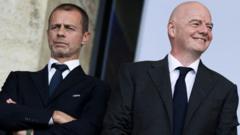
UEFA threatens World Cup boycott over FIFA's $20bn stake sale plan
UEFA and its national associations will boycott FIFA competitions if a proposed stake sale in a subsidiary company is approved.
European football's governing body, UEFA, and its national associations have declared they will not participate in FIFA competitions, a dramatic escalation in response to FIFA president Gianni Infantino's plan to sell a 20% stake in a company managing the sport's global events. The bombshell statement, issued on Thursday, represents a significant challenge to Infantino's leadership and his vision for FIFA's commercial future.
The proposed deal involves selling a stake in a subsidiary company established to run FIFA's competitions, including the lucrative World Cup. This company is intended to be managed by FIFA but would be partly funded by private investors, including Joshua Kushner, brother-in-law of former US President Donald Trump's son-in-law. This move has been met with strong opposition from UEFA, which views it as a step too far in commercializing the sport's core assets.
UEFA's boycott threat will be activated if Infantino's funding deal is accepted by the September 19 deadline. Nations have been offered $20 million by January 1 if they agree to the terms. This timeline means countries could withdraw from ongoing FIFA tournaments, such as the U20 Women's World Cup starting September 5 in Poland, potentially even during quarter-final or semi-final stages. The potential disruption extends to senior competitions, including the Women's World Cup play-offs scheduled for October.
UEFA vice-president Laura McAllister stated that no one can "countenance the thought of not being involved" in these prestigious competitions, emphasizing that the situation is a FIFA-created problem. She added that UEFA has been "pushed into this corner" and that FIFA bears responsibility. The immediate implications point to significant uncertainty regarding the future of several FIFA competitions and the potential for widespread player and national suffering.
The future for Gianni Infantino himself remains uncertain amidst this unprecedented standoff. FIFA has yet to issue an official response to UEFA's statement. However, CONCACAF, the governing body for football in North, Central America, and the Caribbean, has also expressed concerns, indicating a growing rift within the global football community over Infantino's commercial strategies.
This confrontation highlights a deep ideological divide between UEFA, historically protective of the traditional football calendar and governance, and Infantino's FIFA, which has pursued more aggressive commercialization and restructuring initiatives. The sale of a stake in a company managing FIFA's core competitions represents a departure from FIFA's traditional structure and has raised alarm bells among stakeholders concerned about private influence over the sport.
Senior European football sources have expressed surprise at the perceived lack of detailed consideration for the wider implications of the proposed policy. The response from a senior European football source suggested that the overall policy decision may have preceded a thorough assessment of its consequences, particularly concerning ongoing and upcoming tournaments.
The situation leaves many questions unanswered. The exact mechanics of the stake sale, the extent of investor influence, and the potential fallout for participating nations and players are still unclear. The coming weeks will be critical in determining whether Infantino can navigate this crisis or if UEFA's bold stance will force a significant shift in FIFA's direction.
This article was written by AI based on publicly available news reporting. Original reporting by the linked source.