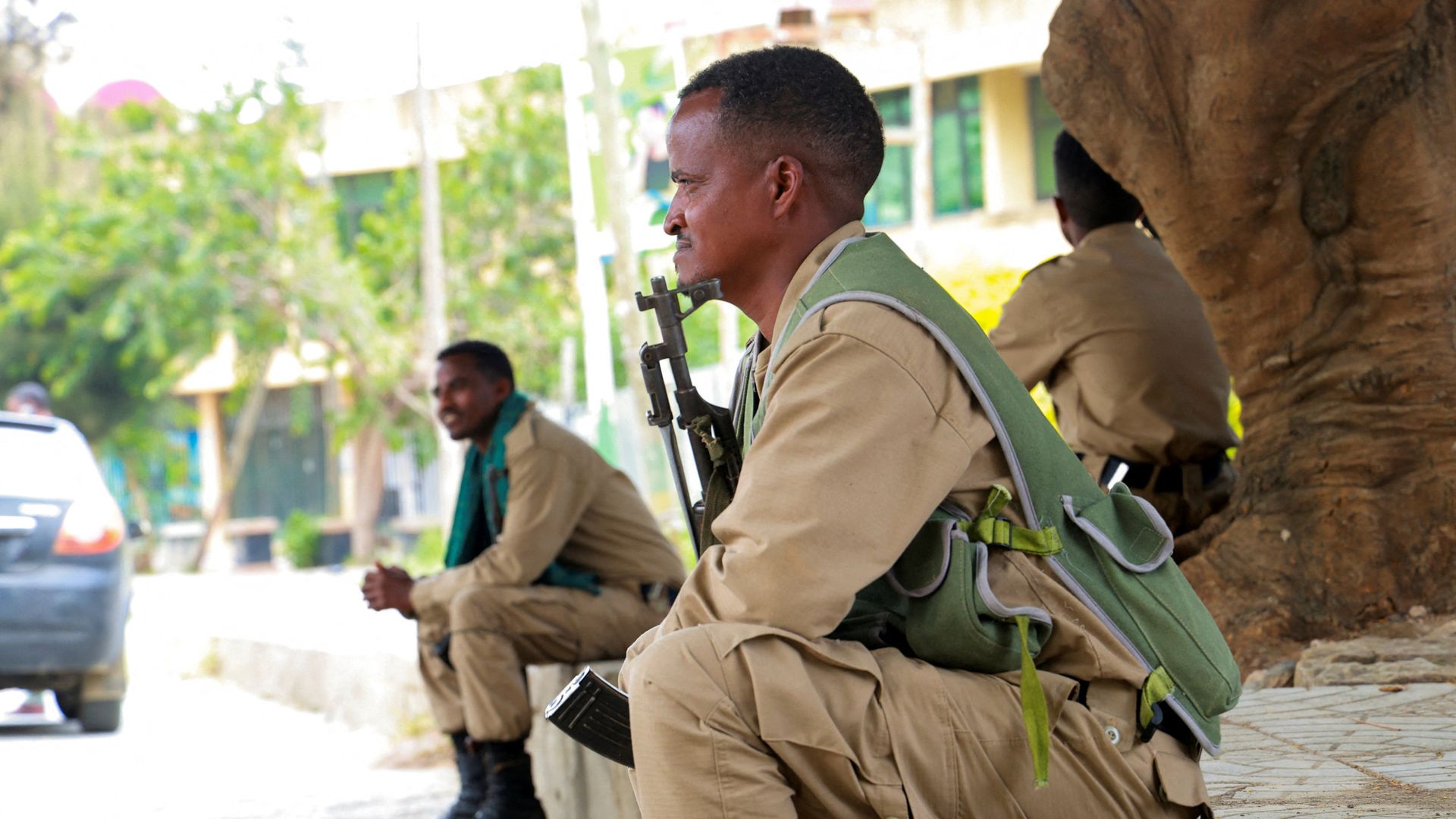
UK Condemns Tigray Forces' Attacks Amid Fears of Renewed Ethiopian Civil War
The UK has condemned attacks by Tigray forces in Ethiopia's northern region, raising fears of a new civil war four years after the last conflict.
The United Kingdom has issued a strong condemnation of recent attacks carried out by Tigray forces in Ethiopia's northern region this week. The escalating violence has heightened concerns that the country could be on the brink of another devastating civil war, mirroring the conflict that ravaged the region four years ago.
The condemnation comes as a stark reminder of the fragile peace in Ethiopia, a nation that has endured significant internal strife. The previous civil war, which concluded with a peace agreement, left deep scars on the country and its people, and any resurgence of hostilities threatens to undo years of recovery efforts and stability.
While specific details regarding the nature and scale of the recent attacks remain to be fully clarified, the involvement of Tigray forces has been explicitly highlighted by the UK government. The swiftness of the international reaction underscores the gravity of the situation and the international community's vigilance regarding potential escalations in the Horn of Africa.
The implications of renewed conflict are far-reaching, potentially leading to a significant humanitarian crisis, widespread displacement of populations, and further destabilization of the wider region. International bodies and neighboring countries are closely monitoring developments, with diplomatic channels expected to be active in de-escalation efforts.
Ethiopia's history has been marked by periods of internal conflict, often stemming from ethnic and political tensions. The civil war that began in late 2020, primarily between the Ethiopian federal government and the Tigray People's Liberation Front (TPLF), lasted for two years and resulted in widespread destruction and a severe humanitarian toll. The peace deal signed in November 2022 brought an end to the major fighting, but underlying issues have persisted.
Analysts suggest that any renewed offensive by Tigray forces could be an attempt to reassert influence or address perceived grievances that were not fully resolved by the peace accord. The international community's response, led by countries like the UK, aims to prevent a relapse into full-scale warfare and encourage adherence to the peace agreement.
Further details are anticipated as the situation unfolds. The focus remains on whether diplomatic interventions can successfully avert a larger conflict and address the root causes of the tensions. The international community's unified stance in condemning the attacks signals a clear message against any actions that could reignite widespread violence.
Unresolved questions linger about the specific triggers for these recent attacks and the full extent of their impact on civilian populations. The coming days will be crucial in determining the trajectory of the situation and the effectiveness of international and regional efforts to maintain peace.
This article was written by AI based on publicly available news reporting. Original reporting by the linked source.