UK defence chief warns of operational cuts without increased funding
UK's armed forces face reduced training and operations if more funding isn't provided, warns defence chief Sir Richard Knighton.
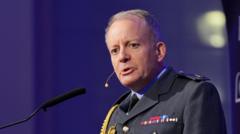
The United Kingdom's armed forces risk scaling back essential training and operational activities if they do not receive increased financial support, according to Air Chief Marshal Sir Richard Knighton, the chief of the defence staff. Sir Richard stated that the government's current Defence Investment Plan (DIP) lacks sufficient funding to cover immediate day-to-day operational needs.
This warning comes in the wake of former defence secretary John Healey's resignation last week. Healey cited the proposed financial settlement as a threat that would "reduce the readiness of our Forces and increase the risk to personnel on operations." He argued that his resignation was a necessary step for "securing the future of Britain's armed forces and our alliances."
Healey directly criticized the Treasury and Chancellor Rachel Reeves, suggesting they were unwilling to allocate adequate funds to address current national security threats. He emphasized that "adversaries do not follow timetables set by the Treasury," implying a dangerous disconnect between financial planning and geopolitical realities.
The government has pledged to increase defence spending to 3.5% of national income by 2035, aligning with NATO allies. However, the DIP, originally slated for release last week, has been further delayed following Healey's departure. Reports suggest the government offered around £10 billion in additional funding over the next four years, a figure reportedly £18 billion short of military chiefs' requests.
New defence secretary Dan Jarvis is currently reviewing the allocation of these funds. However, there has been no indication from Downing Street that additional financial resources will be made available. Healey had previously advocated for the UK to reach a defence spending level of 3% of GDP by 2030, highlighting that "well over half of Nato members will be spending 3% or more" by that time.
In his resignation statement to the Commons, Healey expressed his view that current defence investment plans "fall well short of what is required," noting a minimal projected rise in spending and the absence of a clear timeline for reaching the 3% and 3.5% GDP targets. He stressed the importance of maintaining British leadership within the alliance, warning against falling behind.
Healey's resignation letter further elaborated on his concerns, describing the 10-year DIP plan as "backloaded" with spending increases. He argued that this approach conflicts with the urgent need to enhance readiness for potential conflicts, particularly at a time of heightened global instability.
The core issue revolves around the immediate funding gap for operational readiness versus long-term strategic investment plans. The delay in the DIP's publication and the ongoing review by the new defence secretary leave the exact future of UK defence spending and operational capacity uncertain.
This article was written by AI based on publicly available news reporting. Original reporting by the linked source.