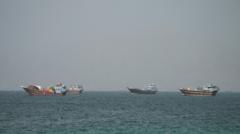
UN Pauses Strait of Hormuz Evacuation After Cargo Ship Attacked
The UN's IMO halted a major sailor evacuation plan following an attack on a cargo ship in the Strait of Hormuz.
The United Nations' International Maritime Organization (IMO) has suspended its planned evacuation of over 11,000 sailors stranded in the Strait of Hormuz after a cargo ship traversing the vital waterway was struck by an unknown projectile. The decision comes just days after the evacuation plan was announced, highlighting ongoing safety concerns in the region.
Hundreds of ships and thousands of sailors have been caught in the Gulf since February, a situation exacerbated by the conflict involving the US and Iran. The Strait of Hormuz, a critical chokepoint for global oil and gas shipments, has faced disruptions, leading to significant impacts on international markets.
The British maritime security agency UKMTO reported that the incident occurred on Thursday, approximately 7.5 nautical miles southeast of Oman's port of Dahit. While the cargo ship, identified as the Singapore-flagged Ever Lovely, continued its journey without requiring assistance and no casualties were reported, the attack has prompted the IMO to pause its evacuation efforts.
IMO chief Arsenio Dominguez stated that while several boats had already been evacuated, the agency needed to ensure "necessary safety guarantees" remain in place. He emphasized that the safety of seafarers is paramount and that the evacuation plan would be paused until further clarity is obtained. Dominguez also noted that the attacked vessel was not part of the IMO's evacuation framework.
This development occurs amidst a complex geopolitical landscape. The US and Iran recently agreed to end hostilities under a 14-point deal, which included provisions for Iran to facilitate the safe passage of commercial vessels for 60 days without charge. However, Iran has indicated plans to impose "maritime service fees" for crossing the strait, a move opposed by the US.
Secretary of State Marco Rubio, currently touring the Gulf, has warned that no nation is permitted to impose tolls on the Strait of Hormuz, referring to it as an international waterway. His visit aims to discuss the recent deal with Tehran.
The closure and subsequent reopening of the strait have had a notable impact on global oil prices. Crude prices briefly fell below $72.48 a barrel earlier on Thursday, a level seen before the US and Israel launched attacks on Iran, before rising again. The recent Memorandum of Understanding between the US and Iran, signed on June 17, has contributed to a downward trend in oil prices, coinciding with negotiations on Iran's nuclear program.
Questions remain about the identity of the perpetrators of the attack on the Ever Lovely and the precise security guarantees the IMO requires before resuming the evacuation. The situation underscores the continued fragility of maritime security in the Strait of Hormuz, despite recent diplomatic efforts.
This article was written by AI based on publicly available news reporting. Original reporting by the linked source.