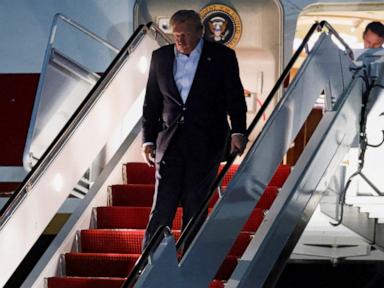
US Intel Doubted Iranian Plot Against Trump's Air Force One
US intelligence agencies questioned the credibility of an Iranian threat targeting President Trump's Air Force One, sources revealed.
U.S. intelligence agencies had doubts about the credibility of an alleged Iranian plot to target Air Force One, according to sources who spoke to ABC News. These doubts emerged before extraordinary security measures were taken to move President Trump to a different aircraft, away from his usual plane.
The intelligence suggesting an Iranian plot to attack Air Force One with a shoulder-fired missile originated with Israel. Israeli officials shared the information with the U.S. as President Trump was preparing to depart from Ankara, Turkey. However, Israeli officials reportedly had not yet completed a full vetting of the intelligence or determined its credibility, but decided to pass it along due to the president's imminent departure.
Despite the initial intelligence sharing, U.S. intelligence agencies ultimately assessed that the information did not indicate a serious or immediate threat to the president. Nevertheless, the Secret Service determined that it could not afford to overlook even a potential threat. They recommended enhanced security protocols for the president's departure.
As a result of the Secret Service's recommendation, President Trump was moved to a different military aircraft. This unusual transfer was facilitated by a catering container, allowing him to board the alternate plane discreetly. President Trump later stated that he was following the direction of the Secret Service.
"It's only up to Secret Service. I just follow what they'd like to do," Trump told reporters. "So I go by Secret Service and the military. They wanted me to go on a different flight, a different plane. Equal safety. But they wanted me to do it, so I do it. I do what they say."
Iran has publicly stated its desire to retaliate against President Trump, particularly since his administration's order for an airstrike that killed Iranian General Qasem Soleimani in early 2020. There has been particular sensitivity surrounding threats directed at the U.S. president from Iran and its proxies.
The decision to move President Trump to a different aircraft, despite intelligence doubts, highlights the Secret Service's cautious approach to protecting the president, especially in light of ongoing geopolitical tensions with Iran.
This incident underscores the complex intelligence-sharing processes between allied nations and the challenges of assessing threat credibility in high-stakes situations involving national leaders.
This article was written by AI based on publicly available news reporting. Original reporting by the linked source.