Trump Announces US 'Taking Over' Strait of Hormuz, Plans Toll
President Trump declared the U.S. will control and charge fees for passage through the Strait of Hormuz amidst ongoing strikes with Iran.
President Donald Trump announced Monday that the United States is "taking over" the Strait of Hormuz, declaring plans to control and protect the vital waterway and charge passage fees. The assertion comes amid continued, albeit limited, exchanges of strikes between the U.S. and Iran, despite ongoing peace talks.
Trump stated in a live phone interview that the U.S. would "run" the strait, positioning America as its "guardian." He suggested the U.S. should be "reimbursed" for providing safety and security to the strategic chokepoint. While the specific payment mechanism was not detailed, the president has previously indicated a toll on vessels transiting the waterway.
Adding to the announcement, President Trump stated on social media that the U.S. would reinstate a naval blockade against Iranian ships and ports. He specified this blockade would target "only stopping Iran’s ships or customers from entering or leaving." Furthermore, he announced a "20% fee on all cargo shipped through the Strait of Hormuz," which he claimed would cover "any and all costs necessary" for ensuring safety and security in the region.
The president linked these actions to Iran's alleged reneging on commitments made under a memorandum of understanding (MOU) signed in June as part of peace negotiations. Trump claimed the U.S. launched significant strikes against Iran on Sunday night in retaliation for Iran breaking the deal. He alleged that Iran had agreed to terms in an 11-hour meeting on Sunday before proposing changes, though the specific nature of these proposed changes was not disclosed.
Delegations from the U.S. and Iran entered negotiations in June with the aim of reaching a war-ending agreement, based on the MOU. However, the two nations have continued to engage in limited strikes, with the Strait of Hormuz serving as a primary flashpoint for these confrontations. The MOU itself is reportedly in "crisis," according to an Iranian official.
Reports indicate that Kuwait and Jordan have registered new attacks, with sirens sounding in Bahrain, suggesting a widening impact of the regional tensions. The U.S. had previously announced major combat operations against Iran on February 28, targeting military, government, and infrastructure sites in joint U.S.-Israeli strikes.
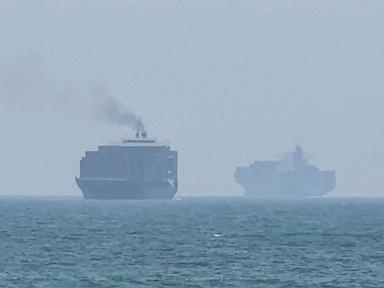
The Strait of Hormuz is a critical maritime chokepoint, through which a significant portion of the world's oil supply passes. Control or disruption of this waterway has major implications for global energy markets and international trade.
The ongoing exchange of strikes and the U.S. announcement of taking control and imposing fees raise significant questions about the future of the peace talks, regional stability, and the potential for further escalation. The exact implementation and enforcement of the blockade and toll remain unclear.
This article was written by AI based on publicly available news reporting. Original reporting by the linked source.