US Soldier Killed in Iraq by Iranian Drone Debris; Tensions Escalate
A US soldier died in Iraq during a controlled detonation of unexploded Iranian drone ordnance, amid escalating US-Iran conflict.
A United States service member was killed in northern Iraq on Saturday during the controlled detonation of unexploded ordnance from a downed Iranian attack drone, the U.S. military announced. The incident, which also wounded a second service member, occurred as tensions between the U.S. and Iran continue to escalate, marking another grim development in a conflict that has seen multiple days of retaliatory strikes.
This latest fatality follows a deadly attack on a U.S. base in Jordan on Friday, which claimed the lives of two American soldiers and left another missing. U.S. Central Command (Centcom) confirmed it had recovered unidentified remains at the Jordan site and an examination process is underway to verify their identity. The ongoing exchange of hostilities between the U.S. and Iran has entered its eighth day, with both nations accusing each other of targeting critical infrastructure.
Centcom stated that the controlled detonation in Iraq was a necessary safety measure following the discovery of the unexploded ordnance. The wounded service member received medical attention. The U.S. military has also been engaged in actions designed to degrade Iran's capacity to disrupt commercial shipping in the Strait of Hormuz, directly responding to what it deems Iran's responsibility for the attack in Jordan.
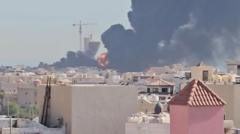
Verified footage from the Jordanian facility depicted at least two impacts and a significant explosion, underscoring the severity of the attack. The U.S. death toll in the broader conflict has now risen to 17, including an American Navy pilot previously declared dead after going missing earlier this month. In Iran, the country's health ministry reported that U.S. strikes over the past three weeks have resulted in at least 50 fatalities and over 500 injuries.
As hostilities persisted into Sunday, Iranian media reported that an under-construction nuclear power plant in Darkhoveyn and Qeshm Island were struck. The UN's nuclear watchdog urged restraint, noting that the Darkhoveyn site was in its nascent stages and contained no nuclear material during its last inspection. Jordan's military successfully intercepted three Iranian missiles, with a fourth landing in a remote area, according to the kingdom's state news agency. This occurred after a U.S. warning that the port of Aqaba could be a target.
Jordan summoned Iran's chargé d'affaires in Amman, demanding an immediate cessation of what it termed "unjustified and blatant Iranian attacks" and asserting that its security is a non-negotiable "red line." Israel's military also reported launching interceptors towards missile debris that posed a potential impact risk within Israeli territory, identifying fragments near the southern city of Eilat without any reported damage or casualties.
In a separate development, the Islamic Revolutionary Guard Corps (IRGC) claimed that two vessels ignored warnings and were involved in an "accident" while transiting the Strait of Hormuz. The IRGC issued a warning to all vessels influenced by the U.S. or using "unsafe routes."
The preliminary ceasefire that had been in place collapsed less than a month prior to the current escalation, leaving unresolved questions about the path toward de-escalation and the potential for further regional instability.
This article was written by AI based on publicly available news reporting. Original reporting by the linked source.