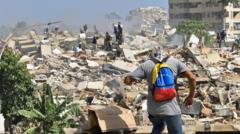
Venezuela Quakes Kill 920; 3,360 Injured as Rescue Efforts Intensify
Over 920 people died and 3,360 were injured in powerful Venezuelan earthquakes, with rescuers seeking survivors amid widespread destruction.
More than 920 people have been killed and 3,360 others injured in Venezuela following two powerful earthquakes that struck the country, according to government figures released Friday. Rescuers are continuing their search for survivors amidst the widespread destruction of buildings, particularly in the nation's north, including the capital, Caracas.
Two strong tremors rocked Venezuela within seconds of each other on Wednesday. The second quake registered a magnitude of 7.5, marking it as one of the most powerful tremors to hit the country in a century. The disaster has left thousands displaced and desperate for news of loved ones.
National assembly head Jorge Rodriguez announced the latest death toll, stating that at least 172 people are still believed to be trapped. He also reported that hundreds of international rescue workers have arrived to assist, with more expected. La Guaira, a region north of the capital, has been identified as the hardest-hit area, officials said.
The implications of the quakes are significant for Venezuela, a nation already struggling with economic challenges. The destruction of infrastructure, including hospitals and the main international airport, will likely exacerbate existing difficulties and require extensive rebuilding efforts.
Many people remain missing, and the death toll is expected to rise as rescue operations continue. In La Guaira, residents like Natacha Diaz are anxiously searching for family members. Diaz recounted that her two daughters, aged 22 and 23, were trapped under the rubble of a collapsed shopping center where they worked.
Acting President Delcy Rodríguez confirmed that dozens of people have been rescued alive, bringing relief to families. However, the aftermath has been compounded by 214 aftershocks recorded since the initial earthquakes. Hundreds of buildings, including hospitals and shopping centers, have been damaged or destroyed, with over 1,000 other infrastructure sites also affected.
Medical facilities are reportedly overwhelmed, struggling with pre-existing shortages of supplies and medicines. Dr. Pedro Javier Fernandez described the situation as an even greater emergency than normal times, making it incredibly difficult to provide adequate medical attention.
Initial rescue efforts have been hampered by disrupted communications, damaged roads, and a lack of resources, with reports of rescuers working with bare hands to pull people from collapsed structures. The full extent of the damage and the final casualty count are still being determined.
This article was written by AI based on publicly available news reporting. Original reporting by the linked source.