Zelenskyy: Starlink Network Still Limited, Urges More Patriot Missiles
Ukrainian President Zelenskyy tells ABC News Starlink has limited range, and Ukraine needs hundreds more Patriot missiles monthly.
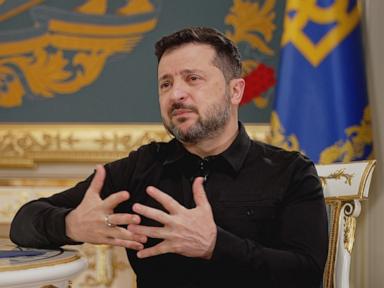
Ukrainian President Volodymyr Zelenskyy stated in an interview with ABC News on Friday that the Starlink satellite internet network, vital for Ukraine's military communications, is still not functioning at its full capacity. Despite previous assurances, Zelenskyy indicated that the network's operational range remains narrow, limiting its effectiveness.
This situation arises amid ongoing military operations where reliable communication and advanced defense systems are paramount. The Starlink network, provided by Elon Musk's SpaceX, has been a critical tool for Ukrainian forces, offering internet connectivity in areas where traditional infrastructure has been damaged or is unavailable. The limitations reported by President Zelenskyy suggest potential disruptions to these crucial communication channels.
"It works, but it's still limited," Zelenskyy told ABC News, emphasizing the restricted range of the Starlink service. When questioned about potential network issues, President Donald Trump, speaking to reporters at the White House on Friday, stated he had not yet discussed the matter with Elon Musk but would do so if problems persist. Trump added that he had heard the network was fixed.
Beyond communication capabilities, President Zelenskyy also highlighted Ukraine's urgent need for more advanced air defense systems. He revealed that Ukraine has received only 24 Patriot interceptor missiles from the U.S. in the past three months, a number he deems insufficient given the scale of Russian attacks. Zelenskyy noted that Ukraine requires an average of 350 Patriot interceptors per month to adequately defend against ballistic missile threats, citing an instance where 30 ballistic missiles struck the capital, Kyiv, on Thursday night alone.
Recent statements from Elon Musk on the social media platform X clarified the distinct roles of Starshield and Starlink. Musk explained that Starshield systems are government-owned and controlled, with the U.S. military and the President determining any speed or usage limits. Starlink, conversely, is described as a commercial service, and its usage is restricted to civilian or defensive purposes, explicitly prohibiting offensive military actions.
Ukrainian officials have also reported a lack of timely warnings for Russian ballistic missile attacks, a departure from the consistent intelligence sharing previously experienced. This has led to increased vulnerability during strikes. Following discussions with U.S. officials, Zelenskyy had previously announced on a Tuesday that the early warning system had resumed, with Starlink service expected to be restored within 48 hours.
However, Secretary of State Marco Rubio on Tuesday denied any pause or alteration in U.S. intelligence sharing with Ukraine. The White House has reportedly increased pressure on Zelenskyy to engage in peace negotiations with Moscow, with President Trump having previously blamed Russia's actions on Ukraine's stance.
The discrepancies in the functionality of the Starlink network and the ongoing challenges in securing adequate air defense resources underscore the complex and evolving support dynamics between Ukraine and its international partners amidst the protracted conflict.
This article was written by AI based on publicly available news reporting. Original reporting by the linked source.