Canada Wildfire Smoke Blankets Over a Dozen US States
Over 900 Canadian wildfires sent dangerous smoke across more than a dozen U.S. states, impacting air quality from the Midwest to New England.
Dangerous wildfire smoke originating from Canada is currently affecting air quality in more than a dozen U.S. states, stretching from the Upper Midwest and Great Lakes region down to the Northeast and Mid-Atlantic. As of Saturday morning, air quality alerts are in effect across these wide-ranging areas.
The widespread smoke is a direct consequence of over 900 active wildfires burning across Canada. These fires are releasing significant plumes of smoke that are being carried by prevailing winds into the United States. While a storm system moving through on Saturday offered some hope for clearing the haze in certain regions, other areas are expected to experience poor air quality throughout the weekend.
The Midwest and Upper Great Lakes are particularly anticipating diminished air quality as northwesterly winds continue to transport smoke into the region. Major metropolitan areas along the Interstate 95 corridor, including New York City, Philadelphia, Baltimore, and Washington, D.C., are among those that could see their skylines obscured and air quality degrade. Cities such as Pittsburgh, Cleveland, and Buffalo are also forecast to experience the smoke.
Beyond the smoke, severe weather is also a significant concern for several parts of the country. The Storm Prediction Center has issued a Level 3 of 5 risk for severe storms across portions of the Ohio Valley, Northeast, and Mid-Atlantic. These storms carry the potential for damaging winds, hail, isolated tornadoes, and the risk of flash flooding.
Flood watches have been established for areas in the Northeast, including New York City and Philadelphia, extending through Saturday evening. Heavy rainfall associated with these watches could lead to flash flooding conditions. Separately, monsoonal moisture is expected to influence weather patterns from West Texas and southern New Mexico into central and northern Arizona and southern Utah, where daytime heating may trigger thunderstorms with the capacity for heavy downpours and flash flooding.
Adding to the weather concerns, a severe storm threat is also present in parts of Virginia and the Carolinas. Scattered storms in this region could bring damaging winds and heavy rainfall. Cities such as Charlotte, Raleigh, and Virginia Beach are identified as potentially being affected by these conditions.
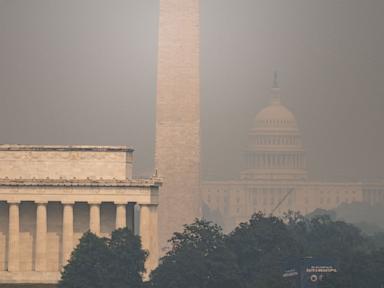
This widespread smoke event has drawn attention, with President Trump reportedly criticizing Canada's management of the fires and suggesting potential tariffs in response. The visual impact of the smoke has been stark, with iconic landmarks like the U.S. Capitol, Washington Monument, and Lincoln Memorial seen through a thick haze in images captured on July 17.
The dual threat of wildfire smoke impacting air quality and severe weather systems poses a significant challenge for residents across multiple U.S. regions, requiring vigilance and adherence to air quality advisories and severe weather warnings.
This article was written by AI based on publicly available news reporting. Original reporting by the linked source.