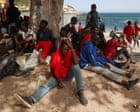
Ceuta Leader Calls Moroccan Border Breach an 'Atrocity' and Attack
Ceuta's leader accused Morocco of encouraging or permitting an 'atrocity' after 48,300 people crossed the border, overwhelming the Spanish enclave.
The leader of the Spanish enclave of Ceuta has accused Morocco of orchestrating or at least permitting an "atrocity" following a massive influx of migrants that saw tens of thousands cross the border.
Juan Jesús Vivas, the long-serving conservative leader of Ceuta, described the recent border crossings as a violation of Spain's territorial integrity. The extraordinary event overwhelmed the city of 84,000 and triggered a political crisis within the European Union, with some member states attributing blame to Spain.
Spain's interior ministry reported that approximately 48,300 of the nearly 50,000 individuals who arrived in Ceuta had been returned to Morocco. Vivas stated that the situation was grim, noting the presence of 88 bodies in the morgue and more on the Moroccan side of the border, a detail that underscored the human cost of the crisis.
"People see this not as a migration crisis; it was fundamentally an attack, a violation of Spain’s territorial integrity," Vivas told El País newspaper. "People felt that this, if not orchestrated, was at least encouraged or permitted by Morocco." This sentiment has raised questions about Morocco's role and its relationship with Spain.
Preliminary assessments from Spanish intelligence services appear to support the insinuation of Moroccan involvement. While not concluding that the influx was entirely planned by Moroccan authorities, the services indicated that Morocco had failed to prevent a large number of people from reaching the border and, in some instances, had facilitated their passage.
This situation draws parallels to a similar event in May 2021, when Morocco loosened border controls, allowing over 10,000 people to enter Ceuta within two days. That incident occurred during a diplomatic dispute concerning Spain's decision to admit a Western Sahara independence leader for COVID-19 treatment.
The mass crossing has put pressure on the EU to show solidarity with Spain, highlighting the complex geopolitical dynamics at play. The enclave's location makes it a constant flashpoint for migration issues, with Morocco often playing a crucial role in managing or influencing the flow of people.
As Spain grapples with the aftermath and seeks a unified EU response, the accusations against Morocco and the underlying causes of such large-scale movements remain central to understanding the future of migration and border security in the region.
This article was written by AI based on publicly available news reporting. Original reporting by the linked source.