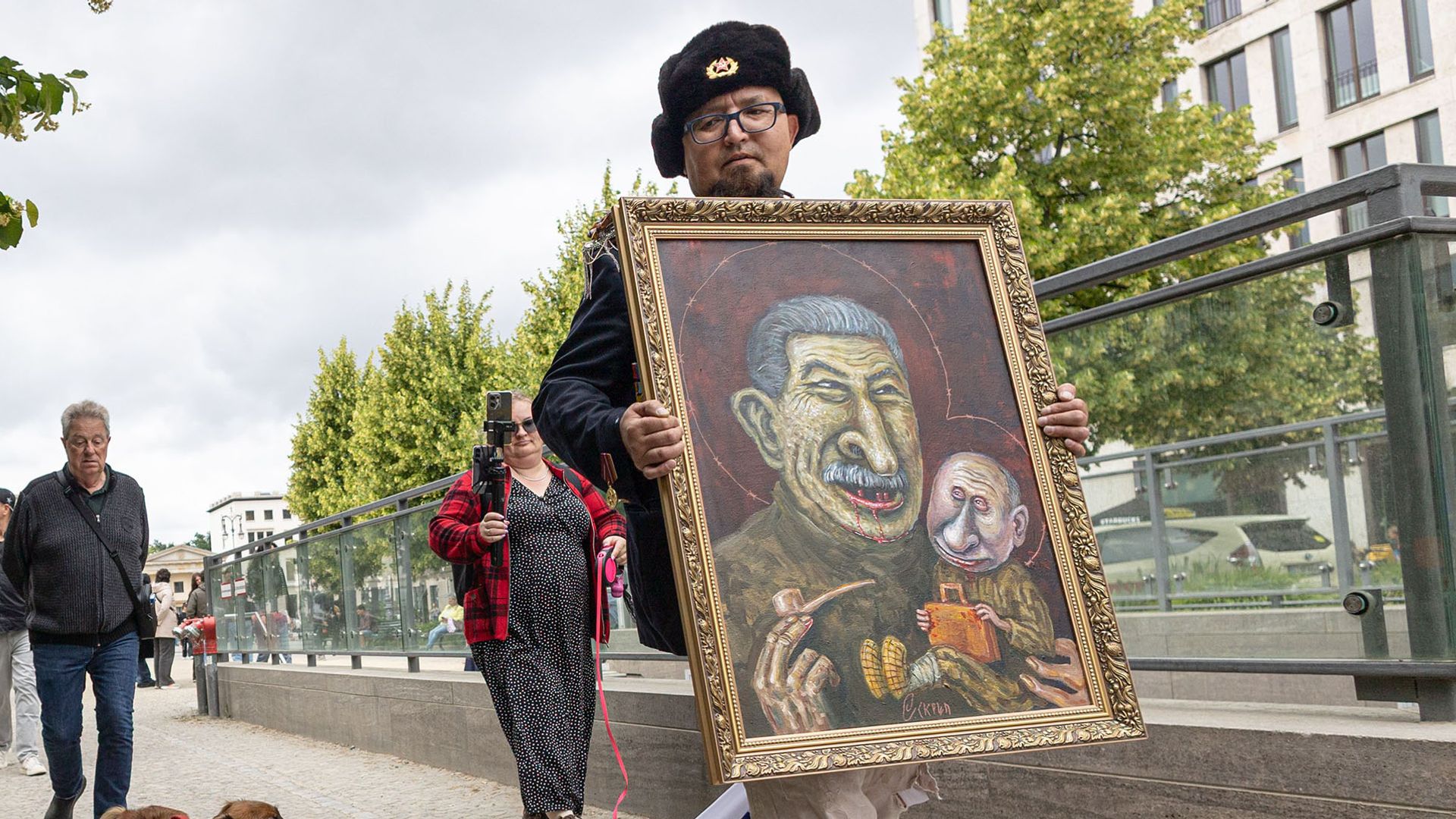
Critic of Putin, Russian Artist, Shot Dead in Poland
A Russian artist known for criticizing President Putin was shot and killed Monday near his home in eastern Poland.
A Russian artist who had publicly criticized President Vladimir Putin was shot and killed on Monday near his residence in eastern Poland. The artist, whose identity has not been officially released, was a vocal opponent of the Russian government and its policies.
The incident occurred in a region of Poland that has seen increased attention due to its proximity to Ukraine and its role in supporting Ukrainian refugees. The artist had been living in Poland for some time, having left Russia due to political pressures.
Authorities in Poland have launched an investigation into the shooting. Initial reports suggest the artist was targeted. Details surrounding the circumstances of his death, including the exact location and time, are still emerging as law enforcement gathers evidence and interviews potential witnesses.
The killing raises concerns about the safety of Russian dissidents living abroad and the potential reach of hostile actors. It also highlights the ongoing geopolitical tensions that continue to impact individuals even in neutral countries.
While the artist's critical stance towards the Russian government was well-documented, it remains unclear whether his death is directly linked to his activism or if other motives are involved. Investigators are reportedly exploring all possibilities as they work to identify the perpetrator(s).
This event echoes other incidents in recent years where Russian expatriates or critics of the Kremlin have faced threats or attacks in various European countries. Such events often strain diplomatic relations and fuel international scrutiny.
Further details are expected to be released by Polish law enforcement as the investigation progresses. The artist's community and human rights organizations are closely monitoring the situation, calling for a thorough and transparent inquiry.
Questions persist regarding the security measures in place for individuals seeking refuge in Poland and other European nations from political persecution, particularly those who have openly challenged authoritarian regimes.
This article was written by AI based on publicly available news reporting. Original reporting by the linked source.