DRC Ebola Outbreak Becomes Deadliest in Nation's History
The Democratic Republic of the Congo's current Ebola outbreak has surpassed all previous national tolls, with over 2,325 deaths recorded.
The Ebola outbreak in the Democratic Republic of the Congo (DRC) has now become the deadliest in the country's history, surpassing the 2018-20 outbreak with at least 2,325 recorded deaths. Official data indicates confirmed cases have climbed to 4,945, with 101 new cases reported in the preceding 24 hours. This escalating epidemic is on track to become the largest in history, potentially exceeding the scale of the 2014-16 west Africa outbreak.
The World Health Organization (WHO) has previously declared the outbreak a global health emergency, underscoring the severity of the situation. The UN recently stated that Ebola was "winning in the Democratic Republic of the Congo," highlighting the rapid transmission rate, with one death occurring approximately every 30 minutes. The affected regions are concentrated in six of the DRC's 26 provinces, primarily along the country's northeastern border.
Ituri province, where the outbreak was initially reported, has accounted for over 3,400 of the total cases. The current surge marks the 17th Ebola outbreak in the DRC and is characterized by its rapid growth. To illustrate the speed, the west Africa outbreak took nearly five months to reach 1,000 deaths, whereas the DRC outbreak achieved more than 2,000 deaths in less than three months.
The current outbreak is caused by the rare Bundibugyo strain of the virus, for which there are no approved vaccines or treatments. Despite the challenges, there have been positive developments, with 1,000 individuals in the DRC having recovered from the infection. Currently, 730 patients remain in healthcare or isolation facilities.
Clinical trials for two potential treatments targeting this specific strain commenced last month, offering a glimmer of hope in combating the virus. The WHO's data from the 2014-16 west Africa outbreak, which affected Guinea, Liberia, and Sierra Leone, recorded 28,616 cases and 11,325 deaths, serving as a benchmark for the potential scale of the current epidemic.
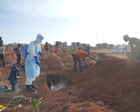
Health workers are actively engaged in containment efforts, including spraying disinfectant in gravesites of those who succumbed to the virus, a somber but necessary measure to prevent further spread. The ongoing nature of the outbreak necessitates continuous vigilance and response from national and international health organizations.
The rapid spread and high mortality rate underscore the challenges faced in controlling Ebola, particularly in regions with limited healthcare infrastructure and ongoing security concerns. The effectiveness of the ongoing clinical trials and the implementation of containment strategies will be critical in determining the future trajectory of this devastating epidemic.
Questions remain about the long-term containment strategies, the impact on public health systems, and the potential for the virus to spread to neighboring countries. The international community continues to monitor the situation closely, providing support and resources to bolster the DRC's response efforts.
This article was written by AI based on publicly available news reporting. Original reporting by the linked source.