Ebola Outbreak in DRC 'Far Worse' Than Official Figures, IRC Warns
The International Rescue Committee warns the Ebola outbreak in the Democratic Republic of Congo is significantly underestimated, citing delayed detection and low contact tracing.
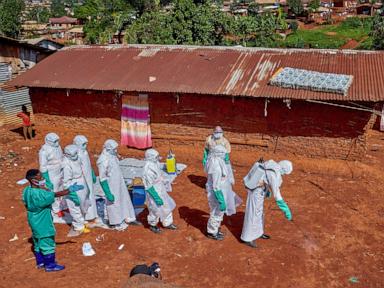
The Ebola outbreak spreading across the Democratic Republic of Congo (DRC) is likely "far worse" than official figures indicate, the International Rescue Committee (IRC) warned on Monday. The aid organization cited delayed detection and critically low levels of contact tracing as major concerns exacerbating the crisis.
This warning comes as the DRC's Ministry of Health reports over 1,000 suspected cases and more than 200 suspected deaths. Of these, 282 cases and 42 deaths have been confirmed. The IRC suggests the virus may have been spreading undetected for months before the epidemic was officially declared in mid-May.
Rachel Howard, senior technical emergency health advisor at the IRC, stated that only about 20% of contacts are currently being traced. This low figure significantly hinders health authorities' ability to identify and isolate new chains of transmission, allowing the virus to spread more easily. The outbreak has already seen at least nine travel-related cases and one death confirmed in neighboring Uganda, raising fears of further regional spread.
The IRC is concerned about potential expansion into other countries, including Burundi and South Sudan, according to Howard. Shortages of diagnostic cartridges and a backlog in testing are further slowing case confirmation, obscuring the true extent of the outbreak and complicating response efforts.
Compounding the challenges, at least six healthcare workers have died from the virus, including two doctors in recent days. Howard also noted a worrying trend of people avoiding health facilities, which increases the risk that infected individuals are remaining within communities instead of seeking medical care. This scenario leads to broader transmission across multiple areas and erodes community trust in the response mechanisms.
Howard emphasized that strengthening local, community-based prevention and infection control measures should be the immediate priority to contain the outbreak at its source. She cautioned that without urgent funding, the situation could rapidly deteriorate.
The current outbreak bears a resemblance to the 2018-2020 Ebola outbreak in North Kivu, which recorded over 3,400 cases and 2,200 deaths. That earlier epidemic was complicated by insecurity, population movement, and community resistance, factors that may also be at play in the current crisis.
However, a critical difference in the current outbreak is the absence of an approved vaccine for the specific strain involved, the Bundibugyo virus. This lack of a readily available vaccine for this particular strain presents a significant hurdle in controlling its spread, unlike in some previous Ebola emergencies where vaccination campaigns played a key role.
This article was written by AI based on publicly available news reporting. Original reporting by the linked source.