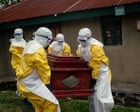
Ebola Virus in DRC May Be Mutating, Cases Surpass 4,000
Ebola cases in the DRC exceed 4,000, with officials fearing the virus may be mutating, prompting a door-to-door response escalation.
Health officials are concerned that the Ebola virus driving a massive outbreak in the Democratic Republic of the Congo (DRC) could be mutating, as confirmed cases have now surpassed 4,000. The Africa Centres for Disease Control and Prevention (Africa CDC) announced a significant escalation in response efforts, including going "door to door" to identify patients, signaling that incremental actions are no longer sufficient.
The current outbreak, caused by the Bundibugyo strain of the Ebola virus, was officially reported on May 15. However, there is suspicion that the disease may have been circulating since January. As of August 4, the DRC's national public health institute reported 3,973 cases and 1,801 deaths. Dr. Jean Kaseya, director general of the Africa CDC, confirmed on Thursday that the total number of cases had exceeded 4,000.
This outbreak is now the second-largest Ebola epidemic on record. When compared to the West Africa Ebola outbreak of 2014-18, which saw over 28,000 infections and at least 11,000 deaths, the DRC outbreak currently has eight times more cases and six times more deaths at a comparable stage.
Dr. Kaseya stated that he had discussed the unprecedented severity of the Bundibugyo outbreak with the World Health Organization's Director-General, Dr. Tedros Adhanom Ghebreyesus. Plans are underway to conduct studies to investigate potential issues, including whether the virus is mutating.
Contributing to the escalating concerns is the high rate of community deaths. More than two-thirds of Ebola fatalities are occurring outside of treatment centers. In one treatment facility run by MSF in Bunia, the capital of Ituri province, 90% of admitted patients were not on official contact lists of known cases. These figures strongly suggest widespread, untracked transmission.
Dr. Kaseya highlighted that contact tracing efforts in the DRC have been insufficient, with an average of only 10 contacts identified per Ebola patient. This low number falls short of the recommended 20 contacts per case needed to effectively control the spread.
The Africa CDC is now planning to scale up all aspects of the response. The "door to door" strategy aims to actively seek out individuals who may be infected and are not yet part of the official case count, a critical step given the high level of community transmission.
Officials are grappling with how to manage an outbreak that appears to be evolving. The potential for viral mutation adds a layer of complexity to an already challenging public health crisis, requiring a more aggressive and comprehensive approach to containment and treatment.
This article was written by AI based on publicly available news reporting. Original reporting by the linked source.