Finland Fortifies Border Against Russia's Hybrid Warfare Tactics
Finland is constructing a new border fence to counter Russia's "hybrid warfare," a strategy involving weaponized migration and disinformation.
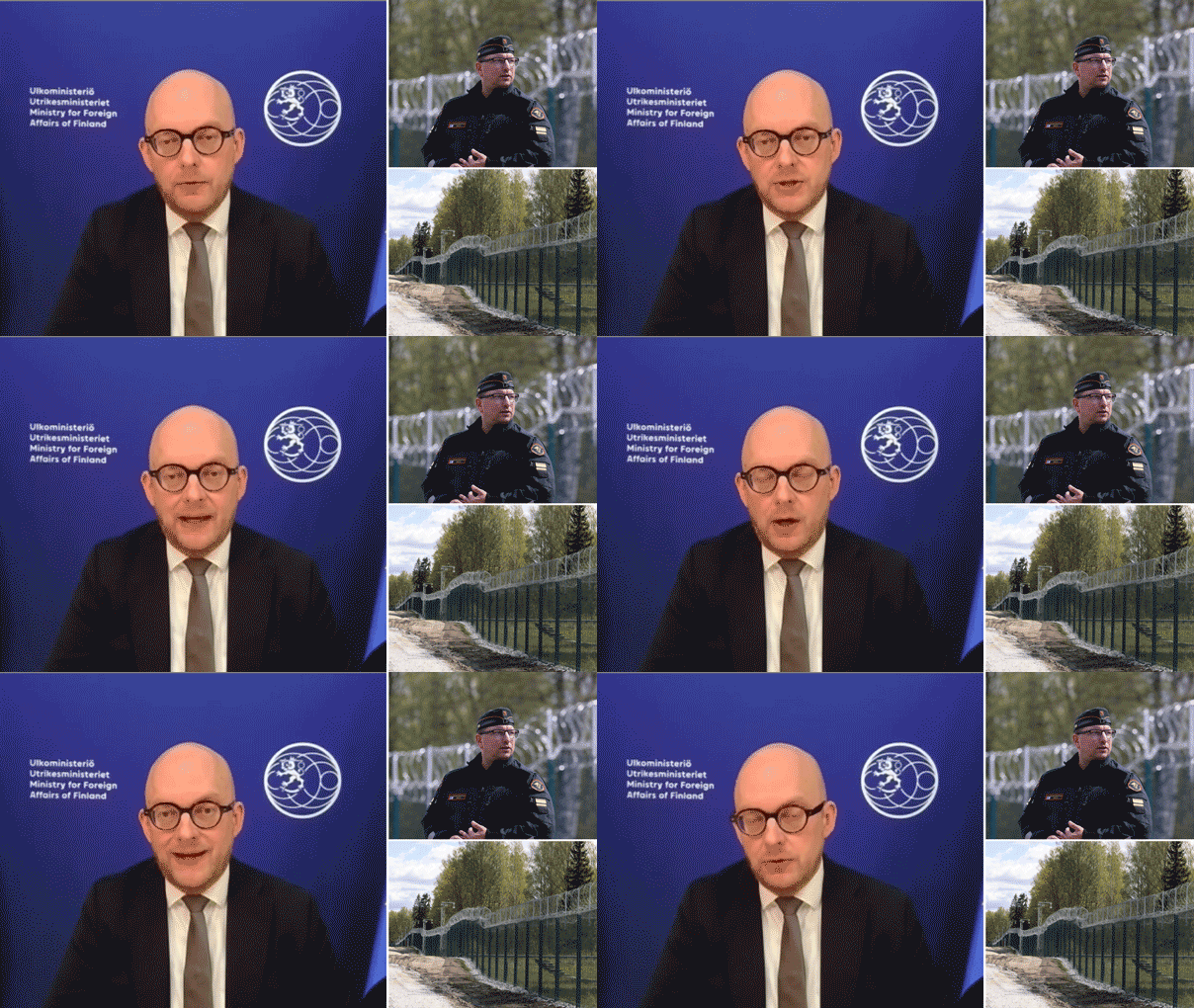
Finland is rapidly constructing a new border fence along its eastern frontier with Russia, a significant undertaking driven by evolving security concerns. The 1,340-kilometer (833-mile) border, much of which is currently marked by simple wooden barriers, is being reinforced with a more substantial structure designed to deter large-scale, state-sponsored irregular migration.
This move comes in response to what Finnish officials describe as Russia's "hybrid warfare" tactics. These tactics reportedly involve using vulnerable third-country nationals as instruments to pressure Finland's borders, a strategy that has been observed on other European borders. The new fence aims to provide a physical barrier and enhance border surveillance capabilities.
The Finnish government has allocated substantial resources to this project, recognizing the strategic importance of securing its border. The initial phase of construction involves a 200-kilometer (124-mile) stretch in key areas, equipped with advanced surveillance technology. Officials have indicated that this is a long-term investment in national security.
The construction of the fence is expected to have significant implications for Finland's border security posture and its relationship with Russia. It signals a hardening of Finland's defensive strategy in the face of perceived external threats and a commitment to safeguarding its sovereignty.
Officials have detailed how Russia's alleged hybrid warfare strategy could involve facilitating or coercing large numbers of asylum seekers to cross the border, creating a humanitarian and political crisis for Finland. The Finnish Border Guard has emphasized that the fence is not intended to prevent legitimate border crossings but to manage and control the flow of people, particularly in response to orchestrated attempts to destabilize the region.
This initiative is part of a broader European trend of strengthening borders in response to geopolitical shifts and migration challenges. However, Finland's direct border with Russia, a nation with which it shares a complex history, lends a particular urgency and significance to these security measures.
The project involves not only the physical construction of the barrier but also the deployment of sophisticated monitoring systems, including thermal cameras and motion detectors. The Finnish government has stated that the fence will be designed to withstand harsh weather conditions typical of the region.
While the fence is a concrete measure, Finnish officials also acknowledge the importance of addressing the informational and political dimensions of hybrid warfare. This includes countering disinformation campaigns and maintaining strong diplomatic channels, even amidst heightened tensions.
This article was written by AI based on publicly available news reporting. Original reporting by the linked source.