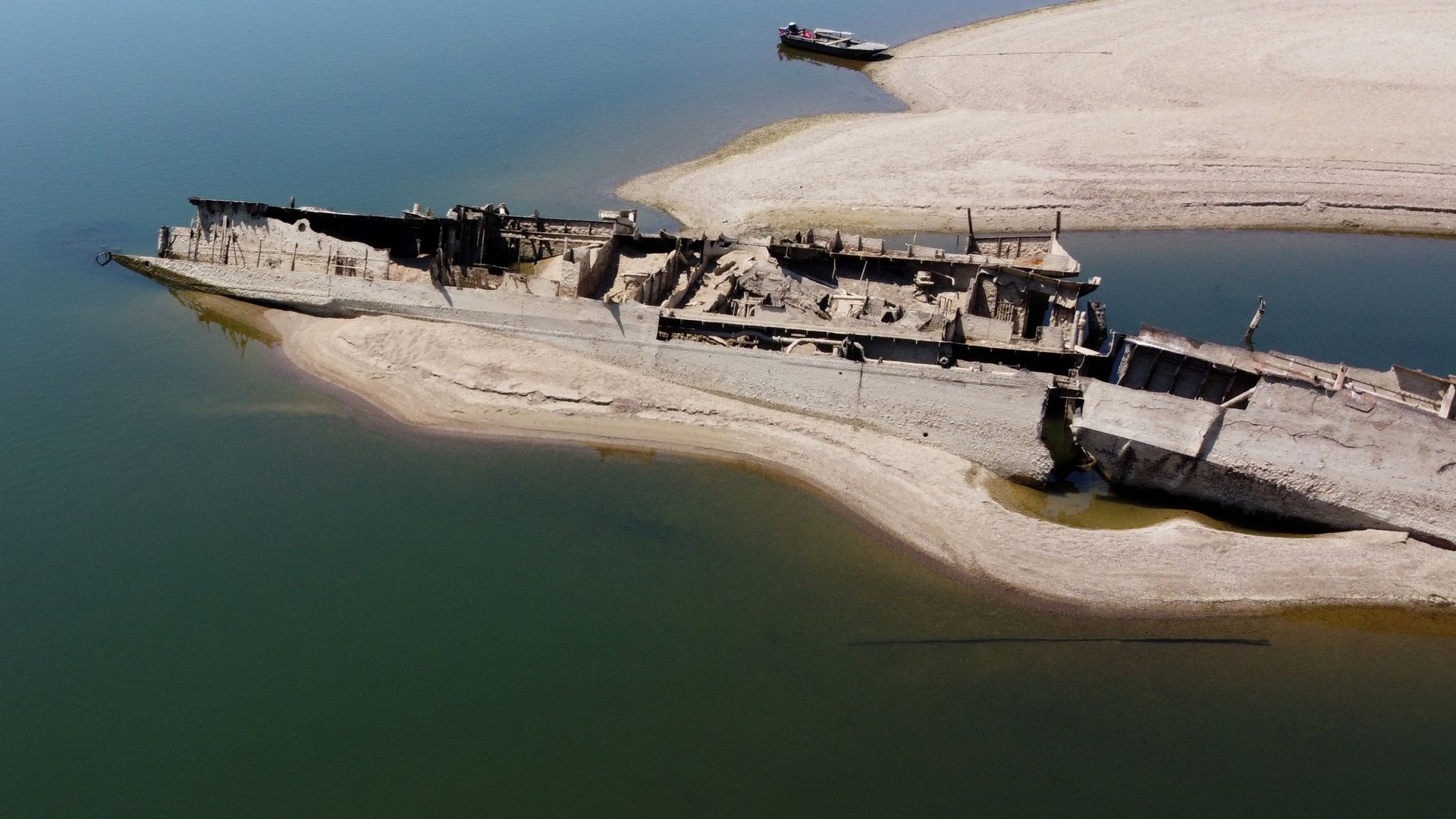
Nazi Warships Emerge from Danube as Record Low Water Levels Expose History
Drought-induced record low water levels in the Danube River have revealed sunken Nazi warships, highlighting Europe's parched conditions.
Sunken Nazi warships have become visible in the Danube River as exceptionally dry weather across Europe has caused water levels to plummet to historic lows. The dramatic drop in the Danube, one of Europe's longest and most vital waterways, has exposed not only the grim remnants of World War II but also underscored the severe impact of the ongoing drought.
The appearance of these vessels is a stark visual reminder of the conflict that raged through Europe decades ago. The Danube, which flows through or borders ten countries, served as a crucial strategic waterway during the war, and numerous ships were sunk or scuttled in its waters. Their reappearance after being submerged for so long is a direct consequence of the persistent lack of rainfall and high temperatures plaguing the continent this summer.
Reports indicate that the Serbian section of the Danube has been particularly affected, with the water receding to levels not seen in decades. This has led to navigation challenges for shipping traffic, impacting trade and the transport of goods. The exposed warships, some still containing unexploded ordnance, pose a potential hazard and are prompting authorities to assess the situation.
The implications of these low water levels extend beyond the historical discovery. The Danube's diminished flow affects ecosystems, agriculture, and energy production, with hydropower plants struggling to operate at full capacity. The exposed warships also present a logistical and safety challenge, requiring careful management to mitigate risks.
Experts have warned that such extreme weather events, characterized by prolonged droughts and heatwaves, are becoming more frequent and intense due to climate change. The Danube's current state serves as a potent symbol of the broader environmental crisis facing Europe and the world.
The Serbian government has reportedly initiated efforts to deal with the exposed ships, including assessing the potential danger posed by any remaining explosives. Clearing these historical hazards is a complex and costly undertaking.
This event draws parallels to other instances worldwide where receding waters have revealed historical artifacts or submerged structures, from ancient ruins to modern-day shipwrecks. However, the presence of potentially dangerous military hardware adds a unique layer of concern.
As the dry spell continues, further consequences are anticipated, including increased strain on water resources and potential disruptions to vital infrastructure. The long-term impact on the Danube's navigability and ecological health remains a significant concern for the region.
This article was written by AI based on publicly available news reporting. Original reporting by the linked source.