Netanyahu, Zelenskyy to Lobby Trump on Iran, Russia Wars at White House
Wartime leaders Netanyahu and Zelenskyy will meet with President Trump Tuesday to discuss Middle East and Ukraine conflicts, seeking to influence U.S. policy.
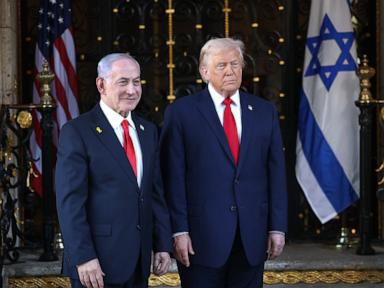
Ukrainian President Volodymyr Zelenskyy and Israeli Prime Prime Minister Benjamin Netanyahu are set to meet with President Donald Trump at the White House on Tuesday, with both leaders aiming to advance their respective agendas amidst ongoing global conflicts.
The meetings occur at a critical juncture, with U.S. policy concerning Iran and the Russia-Ukraine war undergoing significant shifts. Both Zelenskyy and Netanyahu will also attend the funeral service for the late Senator Lindsey Graham, who passed away earlier this month.
Netanyahu intends to discuss Israel's security and its regional standing with President Trump. He conveyed in an X post that the objective is to "safeguard Israel's security, strengthen its power, and expand the circle of peace around us." Netanyahu also plans to pay respects to Graham, whom he described as a "true friend."
These discussions take place against a backdrop of evolving U.S.-Israel relations. While previously aligned, recent tensions have surfaced, with Trump reportedly expressing frustration and Netanyahu believed to be unconsulted on a U.S. memorandum of understanding with Iran that established a temporary ceasefire.
Israeli officials have also voiced concerns over potential U.S. deals, including a nuclear energy agreement with Saudi Arabia and the sale of F-35 fighter jets to Turkey. When questioned about these matters, Trump indicated that he is not always informed about such sales and described his alignment with Netanyahu on the Iran situation as "pretty close," despite "a little difference."
Zelenskyy's primary focus will be on seeking a resolution to Russia's ongoing incursion into Ukraine. He and Trump last conferred on the sidelines of the NATO summit in Ankara, Turkey, earlier this month, and their upcoming meeting is expected to continue discussions on pathways to end the protracted conflict.
Senator Graham was a vocal proponent of Israel and a strong critic of Iran. He had also met with Zelenskyy in Kyiv shortly before his death and was actively working to advance Senate legislation aimed at increasing sanctions on Russia.
The meetings offer both leaders a crucial opportunity to directly engage with President Trump, whose administration's policy decisions carry significant weight in the volatile geopolitical landscapes of the Middle East and Eastern Europe.
This article was written by AI based on publicly available news reporting. Original reporting by the linked source.