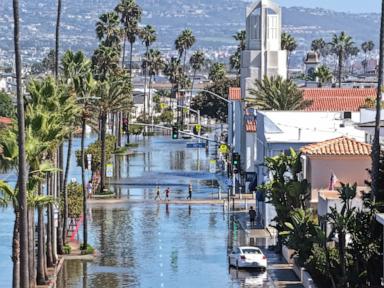
Tropical Storm Rachel Forces California Beaches, Piers Closed Amid Flooding
Remnants of Tropical Storm Rachel and El Niño-driven swells caused major flooding, leading to beach and pier closures in Newport Beach, California.
Coastal areas of Southern California, particularly Newport Beach, were inundated with floodwaters this past weekend due to the combined effects of the remnants of Tropical Storm Rachel and unusually high ocean water levels. The storm system, which made landfall in Baja California on Saturday night, has generated large ocean swells that, when coupled with prolonged swells linked to an El Niño-enhanced Kelvin wave, have led to significant flooding along the coast.
Newport Beach has been experiencing substantial flooding since Friday, with major thoroughfares like Balboa Boulevard and adjacent streets submerged. In response to the escalating situation, the City of Newport Beach declared a local emergency on Saturday. This declaration aims to facilitate the acquisition of additional resources to aid ongoing efforts in protecting homes, property, and public safety from the persistent high tides and elevated surf.
Officials in Newport Beach confirmed that all city beaches and piers are temporarily closed until further notice due to the hazardous conditions. The city issued a statement advising residents to avoid the affected areas, emphasizing the serious safety risks posed by the flooding and hazardous surf. The highest tides were anticipated on Sunday, with elevated surf and unusually high ocean water levels expected to persist through the weekend.
The National Weather Service has issued a coastal flood warning for Orange County beaches, effective from Sunday afternoon through Tuesday afternoon. This warning highlights the potential for significant flooding and beach erosion, exacerbated by the lingering effects of Tropical Storm Rachel. Beyond the immediate coastal impacts, the remnants of Rachel, along with a separate storm system over the Western United States, are fueling flash flood threats across several states, including parts of Southern California, Arizona, Nevada, and Utah.
Tropical Storm Rachel officially transitioned into a post-tropical storm late Saturday night, located approximately 80 miles south-southeast of San Diego. Despite its change in status, its atmospheric remnants continue to contribute to hazardous weather conditions across the region. The broader impact includes rough surf and gusty winds expected to affect the West Coast into Monday.
The convergence of a post-tropical storm and natural oceanic phenomena like El Niño-driven Kelvin waves illustrates the complex factors influencing coastal weather patterns. Experts have noted that the combination of these elements can amplify the severity of coastal flooding events, posing a significant challenge for communities along the shoreline.
The flash flood threat across the Southwest is rated at a level 3 out of 4 in some areas, indicating a substantial risk. This highlights the widespread nature of the current weather disturbances and their potential to cause significant disruption beyond the immediate coastal zones.
As the situation evolves, authorities are focused on managing the immediate flood impacts and ensuring public safety while monitoring forecasts for any further developments related to these compounding weather systems.
This article was written by AI based on publicly available news reporting. Original reporting by the linked source.