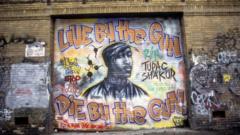
Tupac Shakur murder trial begins 30 years later with Duane 'Keffe D' Davis
Duane 'Keffe D' Davis, 63, faces trial in Las Vegas for the 1996 murder of rapper Tupac Shakur, accused of gang-related homicide.
Thirty years after the fatal drive-by shooting that killed rap superstar Tupac Shakur, a former gang leader is set to stand trial in Las Vegas. Duane 'Keffe D' Davis, 63, has been charged with murder with a deadly weapon with the intent to promote, further or assist a criminal gang. He has pleaded not guilty to the charges. If convicted, Davis faces a potential sentence of life in prison without parole.
The case, which has been shrouded in mystery and fueled numerous theories for decades, is expected to delve into the intense East Coast vs. West Coast rap rivalries and the violent turf wars between the Bloods and Crips street gangs that defined the hip-hop scene in the 1990s. Tupac Shakur's murder on September 7, 1996, significantly impacted the trajectory of hip-hop, transforming the artist into a cultural icon.
Jury selection for the trial began on Monday, with opening arguments scheduled for August 17. The prosecution's case reportedly hinges significantly on a book co-authored by Davis, which he has described as partially fictional. Potential witnesses could include Suge Knight, former CEO of Death Row Records, who was present at the time of Shakur's death.
Davis, identified as a former gang boss and uncle of Orlando Anderson, an alleged South Side Compton Crips member, is accused of orchestrating the killing. The backdrop of the trial is the notorious gang landscape of 1990s Los Angeles, characterized by a fierce rivalry between the Bloods (often associated with the color red) and the Crips (often associated with blue).
This territorial dispute transcended the streets and became amplified through the music industry, particularly through the feud between Death Row Records and Sean 'Diddy' Combs' Bad Boy Records. Despite being born in New York, Tupac Shakur became associated with the West Coast rap scene after signing with Death Row Records.
Authors and experts suggest Shakur's persona as a West Coast rapper did not fully encompass his background. Raised in an environment influenced by the Black liberation movement, his music was deeply intertwined with his activism and political views, as noted by author Santi Elijah Holley. Shakur's prolific career included acting in films and releasing "All Eyez on Me," hip-hop's first double album, which sold over five million copies and solidified his status in gangsta rap.
The trial promises to dissect the complex relationships and rivalries that led to Shakur's death, potentially bringing closure to one of popular culture's most enduring mysteries. The legal proceedings will likely shed light on the intricate dynamics of the music industry and street gangs during a tumultuous era.
Unresolved questions may persist regarding the full extent of involvement and the precise sequence of events that culminated in the tragic loss of the influential artist, Tupac Shakur.
This article was written by AI based on publicly available news reporting. Original reporting by the linked source.